
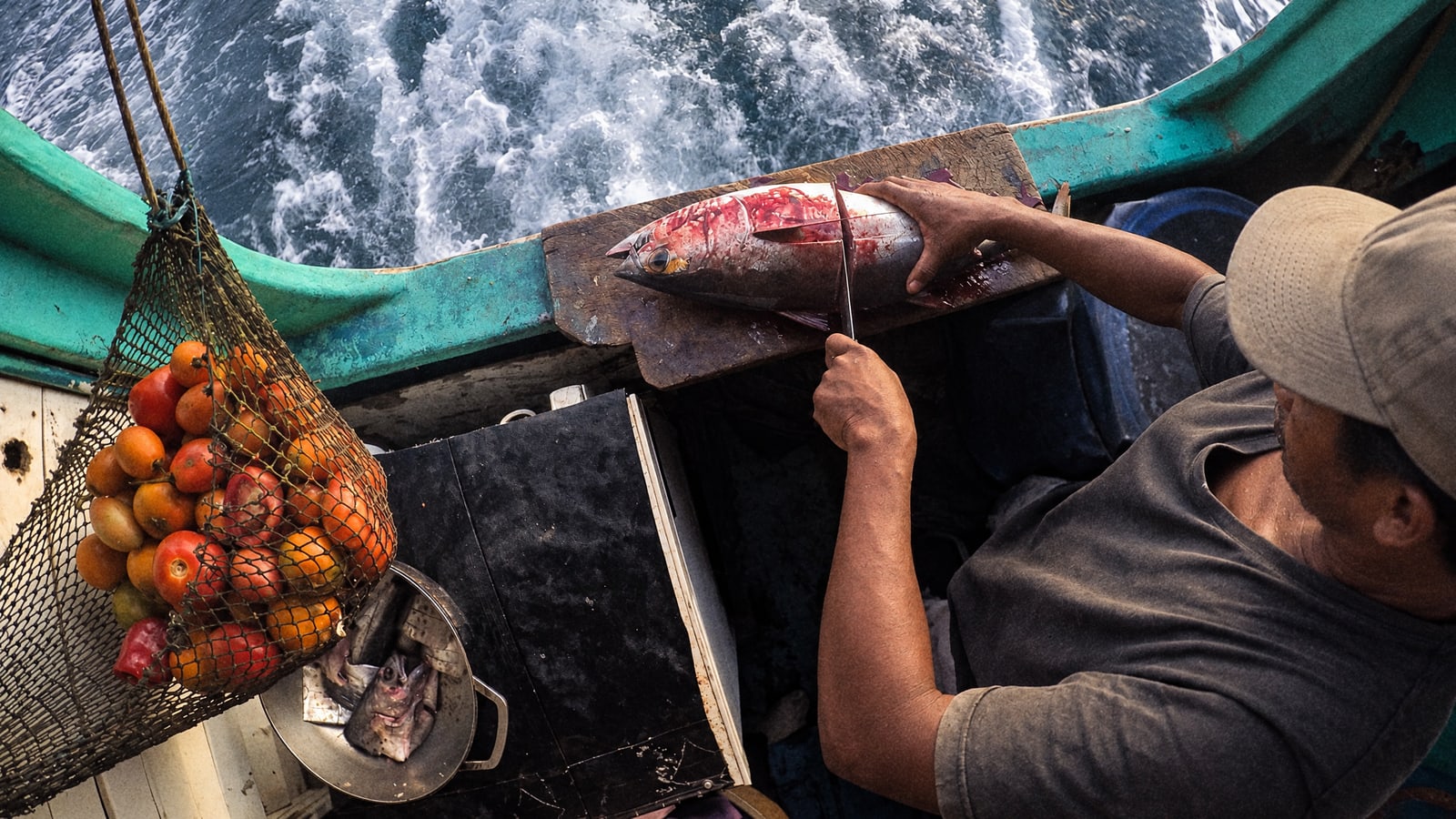
Usually, yes, for the table fish: on most Malta charters you can take home a reasonable share of the lampuki, amberjack, dentex, bream or squid you catch, as long as each fish is above its legal minimum size and the boat holds the authorisation for that species. Bluefin tuna is the exception. Recreational tuna fishing in Malta runs on a tight quota and a one fish per boat per day limit, so many tuna trips release everything. Whatever you keep is for eating, never for selling.
The rest of this guide covers what decides it species by species, what the boat’s licence does for you, and the three things worth agreeing with the skipper before you sail.
The short answer
You can normally keep fish for your own table. Agree it with the skipper before the trip, not at the dock. Maltese charters are run by small local crews, many of them former or working commercial fishermen, and each boat has its own habit. Some send every guest home with a bag of fillets. Some keep the catch by default and share it out. Tuna specialists release almost all of their fish.
None of this is written on most listings, which is why it causes arguments. One message before you book settles it.
What decides whether a fish can be kept
Three things, in this order.
1. The law. Fish under the EU minimum conservation size for the Mediterranean have to go back, whoever caught them. Some species carry extra rules on top, covered below. A good skipper measures before anything goes in the box.
2. The boat’s authorisations. In Malta the licence sits with the vessel, not with you. Boats registered with the Department of Fisheries and Aquaculture (DFA) for recreational fishing need separate special authorisations to target bluefin tuna, albacore and dolphin fish (lampuki). A boat without the tuna authorisation cannot keep a tuna, however big your smile.
3. The boat’s own policy. Within the law, it is the skipper’s call. This is the part you can negotiate.
Species by species
| Fish | Can you usually keep it? | Why |
|---|---|---|
| Bluefin tuna | Often no | One fish per boat per day, a minimum of 30 kg or 115 cm, catch logged, and a national recreational quota that can close the season early |
| Albacore | Sometimes | The boat needs a DFA albacore authorisation |
| Lampuki (mahi mahi) | Usually yes | From 15 August, on a boat with the dolphin fish authorisation |
| Amberjack | Usually yes | Above minimum size; big fish are often shared between the group |
| Dentex, bream, squid | Usually yes | Above minimum size; the classic table fare from reef and bottom fishing |
| Swordfish | No, from 1 January to 31 March | Closed season |
Bluefin tuna: plan to release
Bluefin tuna are the headline fish in Malta, and the waters off the islands are one of the main spawning areas in the Mediterranean. They are also the most tightly managed fish you can hook here. Under EU Regulation 2023/2053, recreational boats may keep one bluefin per boat per day, above 30 kg or 115 cm, and the catch must be recorded. Malta sets its own recreational season and quota on top, and in some past years that quota was used up within days.
What that means in practice: on a tuna trip the fight is the point and the fish usually swims away. If keeping a tuna matters to you, ask the skipper whether the boat holds this season’s authorisation and whether the quota is still open. Boats built around tuna, such as Hooked Malta, Ultimate Tuna Fishing out of Gżira, will tell you straight what the current position is.
Lampuki: the fish people take home
Lampuki, the Maltese name for dolphinfish, is the autumn fish Malta is known for, and it ends up in a lot of family kitchens as lampuki pie. The commercial season with kannizzati, the floating rafts that draw lampuki in, opens on 15 August and runs to 31 December, and late August to November is when charters troll for them.
Two rules matter. Recreational boats need the DFA dolphin fish authorisation to target lampuki. And from 1 August to 31 January only the licence holder may fish within 180 metres of their kannizzati floats, so your skipper will work around the commercial lines rather than over them.
Lampuki are good eating and usually plentiful in season, which makes a trolling trip the best bet if you want fish for dinner.
Reef and bottom fish
Dentex, bream, amberjack and squid are what most Maltese crews mean by fish for the table. A bottom fishing trip over the reefs and ledges is where you are most likely to keep a mixed bag. Fishingmalta out of Ta’ Xbiex fishes for exactly this alongside bigger predators, and Aquaholic Fishing Charter in St. Paul’s Bay is run by Captain Paul, a commercial fisherman who asks what you want to catch and plans the day around it.
Do you need a fishing licence in Malta?
Not on a charter. Malta’s fishing regulations allow rod and line fishing without a personal licence, and the boat carries the vessel licence and any special authorisations. You do not need to apply for anything before a charter trip.
Two exceptions if you fish on your own: Dockyard Creek and French Creek in the Grand Harbour need a special licence, and the species authorisations above still apply to any private boat. Rules change, so check with the DFA before fishing independently. Our Malta fishing seasons guide has the month by month detail.
You can keep it, but you cannot sell it
EU fisheries control rules prohibit selling fish caught recreationally. Whatever you take home from a charter is for you, your family and your friends. That is also why a charter boat’s catch is not a business arrangement: a skipper who keeps fish you caught is not selling them on your behalf.
If you are staying somewhere without a kitchen, ask before the trip whether the crew can fillet and bag the catch for you, and whether a restaurant near your accommodation will cook fish that guests bring in. Ask the restaurant, not the skipper, about that second part.
What to agree before you sail
Send these three questions through the listing before you book. A skipper who answers them clearly is usually a good one.
- What is your policy on the catch? All to the guests, shared, or kept by the boat.
- Do you hold the authorisations for what we want to catch? Tuna, albacore and lampuki each need their own.
- Will you fillet and bag it, and should we bring a cool box? Most boats have ice on board; few have space for every guest’s bag.
If you are a group with mixed goals, say so. A boat like Mister Fish Charters in Marsascala builds trips around what the group wants, inshore or offshore, which is the easiest way to get both a fight and a dinner out of one day.
Gozo and the north
The same rules apply from Gozo. A deep-water trip with fish in deep waters, run by a Gozo skipper who has fished deep water for 30 years, is a good choice if you would rather not know what comes up until it does. Boats with a 12 nautical mile licence, such as the Axopar 37 out of Floriana, can reach further offshore grounds, which matters for tuna and lampuki trips.
Ready to go?
Browse every fishing charter in Malta, or start from the port nearest your hotel: St. Paul’s Bay, Gżira or Marsascala. Each listing shows the trip types, what is included and the price set by the captain, and you can message the skipper with the three questions above before you pay.
Leave a Reply