
No. You do not need a fishing licence to go sea fishing on a charter boat anywhere in the UK. The rod licence sold on GOV.UK covers salmon, trout, freshwater fish, smelt and eel, not the bass, cod, mackerel and conger a sea charter goes out for. The boat does not need a fishing vessel licence either, as long as it only carries people fishing for pleasure and the catch is not sold.
What does apply on a sea trip are catch rules: how many fish of a species you may keep, and how big they must be. Your skipper knows them. This guide explains both, so you can book with nothing to buy and nothing to worry about.
The short answer
Sea angling from a charter boat in England, Wales, Scotland and Northern Ireland needs no licence of any kind from you. You turn up, the skipper provides the boat, and on most UK charters the rods, tackle and bait as well.
The confusion comes from the rod fishing licence, which most anglers in England and Wales do need for rivers, lakes and canals. GOV.UK is precise about what it covers: you need one if you are fishing for salmon, trout, freshwater fish, smelt or eel with a rod and line in England, Wales or the Border Esk region. Sea fish are not on that list, so a day after bass off Ramsgate or pollack over a Plymouth wreck is outside it.
The boat side is settled too. UK fisheries policy treats a vessel used wholly to carry people fishing for pleasure, whose catch is not sold, as a charter angling boat that does not need a commercial fishing licence. That is the skipper’s business, not yours, but it answers the question people ask on the pontoon: is this all above board? It is.
Country by country
The answer is the same across the UK, with small differences at the edges.
- England and Wales. No licence for sea fish from a boat or the shore. The Environment Agency and Natural Resources Wales rod licence is only for salmon, trout, freshwater fish, smelt and eel.
- Scotland. No rod licence system at all, except on the Border Esk, which runs into England. Salmon and sea trout fishing needs permission from whoever owns the fishing rights, but that never comes up on a sea charter.
- Northern Ireland. NI Direct states there is no need for a rod licence for sea angling, except when fishing for or taking salmon or sea trout, which need a game rod licence.
So a family from London on a Kent charter, a group of friends on a Plymouth wreck trip and a visitor from abroad on a half day out of Ramsgate are all in the same position. Nothing to buy before the trip.
When the answer is different
There are three situations where a licence or permit does come into it.
You target salmon, sea trout, smelt or eel. Fishing deliberately for those species with a rod and line in England and Wales needs the rod licence, even in an estuary. No sea charter you will find on Reelzy fishes for them, but it matters if you add a river day to the trip.
Bluefin tuna. Bluefin are back off the south and west coasts, and the recreational fishery in English waters is catch and release only, run by the Marine Management Organisation. It is the boat that needs the permit, not the angler: for 2026 the MMO issued permits to 89 charter vessels, the season runs from mid July to 30 November, and every permitted boat must carry someone who has passed the mandatory catch and release training. If a boat lists bluefin among its targets, ask whether it holds a permit this season before you book a tuna day.
Inland waters on the same holiday. A day on a trout lake or a canal near your hotel needs the rod licence (children under 13 are exempt and junior licences for 13 to 16 are free), and usually a permit from the fishery as well. That is a separate trip with separate rules.
The rules that do apply at sea: what you can keep
No licence does not mean no rules. Sea fish are managed by catch limits and minimum sizes, set nationally and by the regional Inshore Fisheries and Conservation Authority, or IFCA. The one that matters most on a south east charter is bass.
Under the 2026 bass guidance from the Marine Management Organisation, as summarised by Eastern IFCA, recreational anglers fishing from the shore or a boat may keep three bass per person per day in January and from 1 April to 31 December. From 1 February to 31 March bass are catch and release only. The minimum size is 42 cm, measured from the tip of the snout to the end of the tail with the mouth closed. The limit is per angler, so a skipper cannot keep extra fish for a guest who has already reached theirs.
Other species carry their own minimum sizes, which vary by IFCA district and change from year to year. You do not need to memorise them. A skipper who runs trips week in, week out measures and returns fish as a matter of routine, and will tell you what can go in the box before it does.
If you plan to take bass home, read our guide to what to do after catching a sea bass: how to dispatch, bleed and ice it in the first fifteen minutes so the fillets are worth the trip.
What your skipper handles
On a UK charter the paperwork that exists sits with the boat. The skipper holds the qualifications and the vessel’s safety coding, carries the safety gear, knows the local byelaws and keeps the boat legal. What you bring is clothing, food and a cool box for the catch.
What each boat includes varies, so it is worth reading the listing rather than assuming. A few examples from boats on Reelzy:
- Hussler Charterboat Ramsgate runs 4 and 6 hour trips from Ramsgate Marina with pontoon boarding at any state of tide. Tackle and bait are supplied, so the listing asks you to bring lunch, drinks and a cool box. No alcohol on board.
- Lady Ann, a family run boat based in Ramsgate for the past eleven years, supplies all bait and tackle, keeps the tea and coffee going all day, and prepares your fish for the table before you step off. Children are welcome.
- Kestrel Warrior Fishing Trips on the East Sussex coast has a small tackle shop on board, rod hire, a fishing coach giving free tuition and a free gutting and cleaning service. A good fit if you have never held a sea rod.
- Fishing with Andy out of Plymouth runs full days of about ten hours, from around 07:15 to 17:00, for wrecks, banks and rough ground, and takes individual anglers as well as whole boat bookings.
- Topspotfishing is a different kind of trip: guided lure fishing for bass in Kent and Sussex with tuition, and catch and release welcome.
Some UK listings tick “fishing licence” among their amenities. On a sea trip, read that simply as confirmation that there is nothing for you to arrange.
Before you book
- Check what the trip includes. Rods, tackle and bait are standard on most UK charters, but not on every guided trip. If you bring your own gear, ask what line class and lead weights the skipper fishes.
- Ask what you can keep. Agree before the day whether you want fish for the table, and how many. With bass at three per angler, a party of four that wants a family meal is well covered.
- Bring a cool box and ice packs. Several boats ask for one. The boat’s ice box keeps fish cold at sea, yours gets them home.
- Plan for the weather. UK skippers cancel or move trips when the forecast is wrong. Book with a little flexibility in your dates.
- Fishing abroad next? The answer changes outside the UK. In Spain, for instance, the charter’s collective licence covers you, but catches now have to be declared through the PescaREC app: see our guide to fishing licences in Spain.
Ready to go?
Browse all fishing charters in the UK, or go straight to a port: Ramsgate, Kent, East Sussex and Plymouth. Each page lists the boats, what they fish for and how to message the skipper directly. If bass are what you are after, our guide on how to catch bass in the UK covers tides, baits and lures before you go.
Sources: GOV.UK, Buy a rod fishing licence (when you need a licence); Marine Management Organisation, Bluefin tuna catch and release recreational fishery within English waters (updated 3 September 2026) and news release of 9 July 2026; NI Direct, Sea angling and Angling rod licences explained; Eastern IFCA summary of the 2026 recreational bass rules. Checked 7 October 2026.
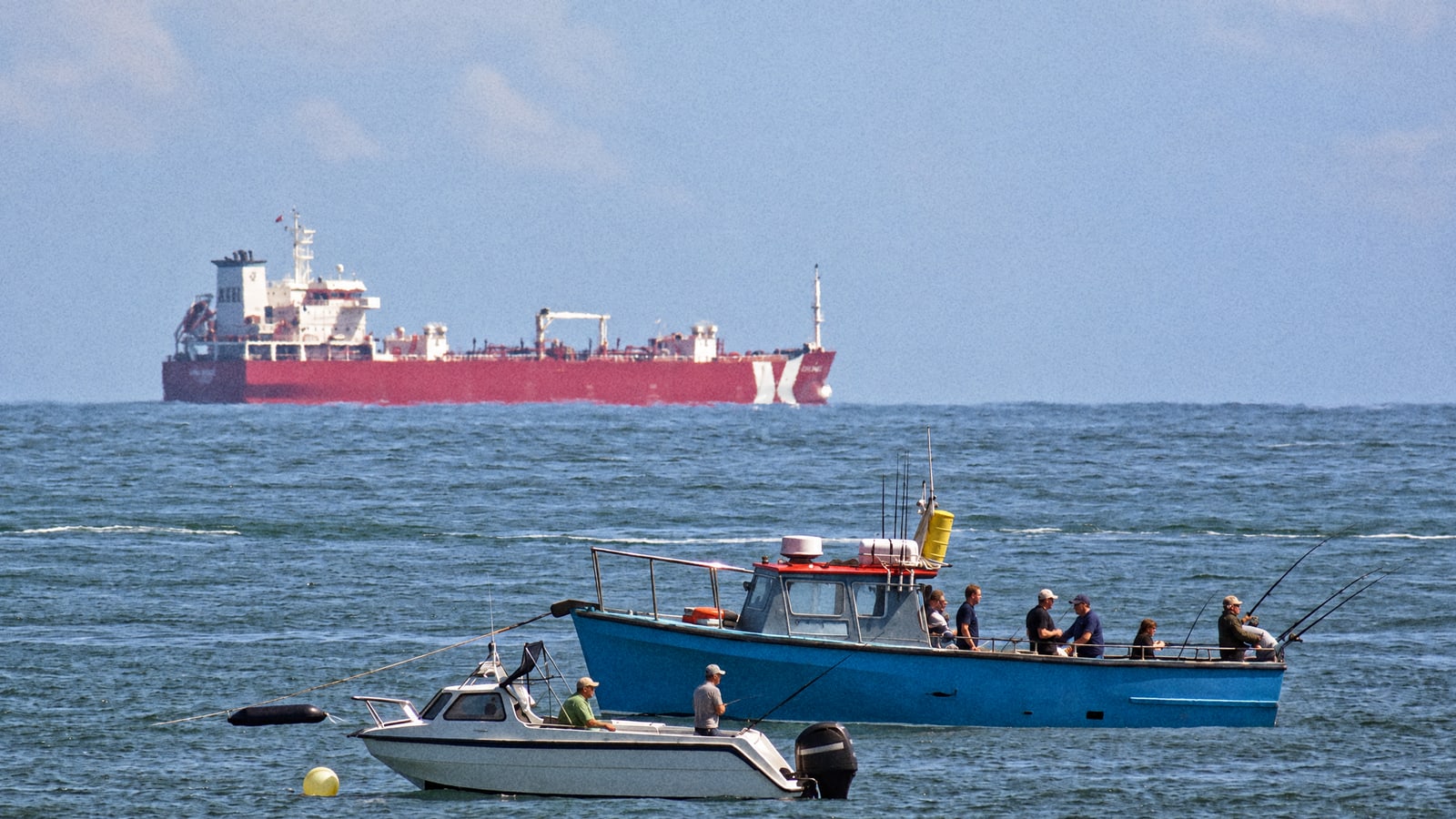
Cover: "Sea angling boats and container ship off Broadstairs, Kent, England 1" by Acabashi, CC BY 2.0, edited (colour, retouching).
Leave a Reply