
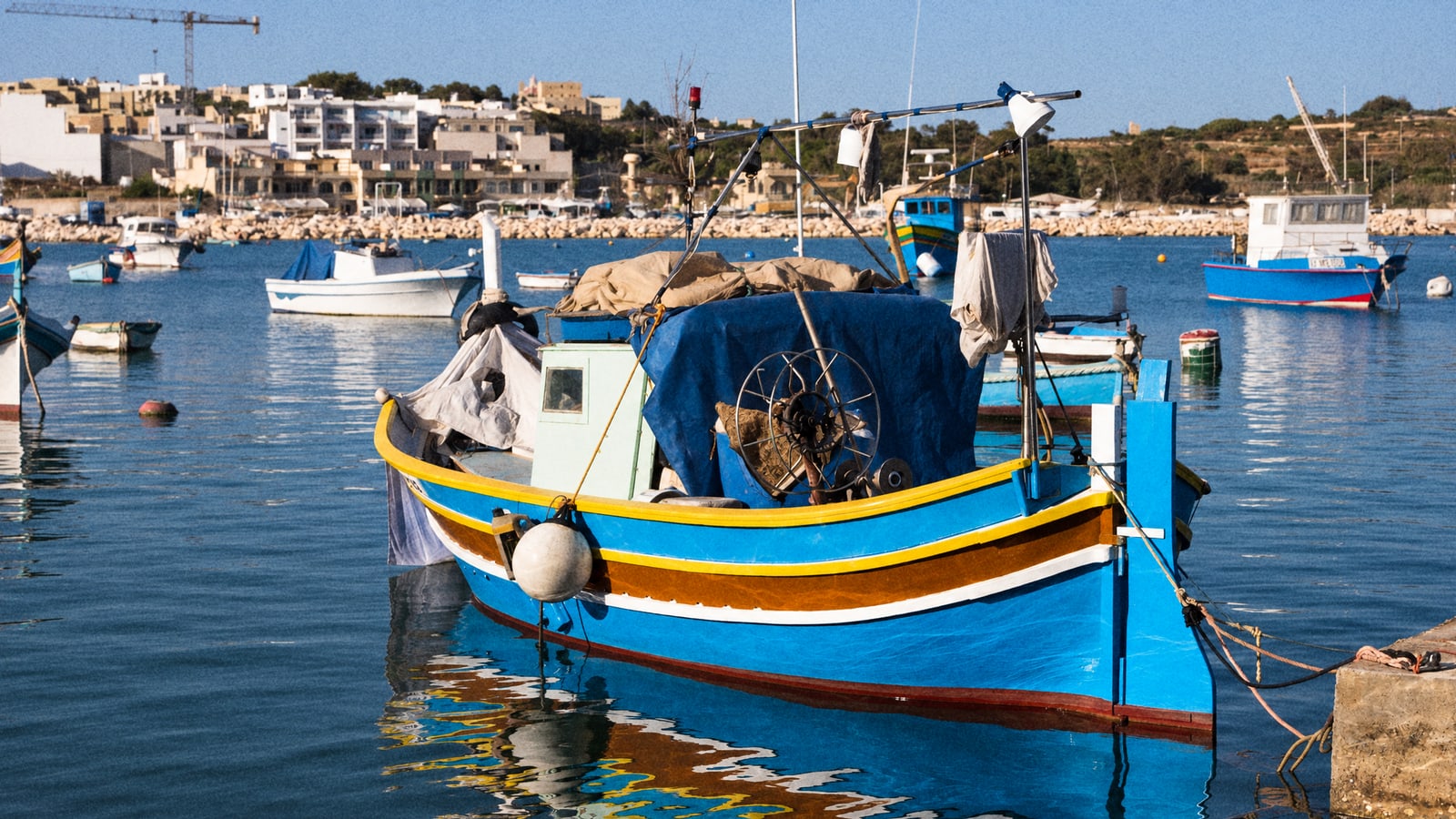
Malta fishes all year, but each species has its window. Bluefin tuna pass the islands from late spring into summer, lampuki (mahi mahi) open legally on 15 August and run to the end of the year, amberjack and dentex are best from late spring through winter, and squid fishing is a night job from autumn to early spring. Swordfish are closed from 1 January to 31 March. You do not need a licence to fish with rod and line on a charter or from the shore.
Planning a trip in the next few weeks? October and November are lampuki months: charters troll offshore around floating cover, the water is still warm, squid fishing starts at night and dentex and amberjack are on the reefs. From November keep a spare day, because the gregale can stop boats for several days at a time.
Malta fishing seasons at a glance
As of October 2026. Months are when each species is realistic for visiting anglers, based on EU rules and local charter and angling sources. Legal dates are marked as such.
| Species | Best months | Legal limits worth knowing |
|---|---|---|
| Bluefin tuna | May to July for the migration, summer and early autumn for sport fishing | One fish per boat per day, 30 kg or 115 cm minimum, catch must be logged |
| Lampuki (mahi mahi) | Late August to November | FAD season opens 15 August |
| Amberjack | May to February, best in summer | No EU minimum size, Malta’s general rule applies |
| Dentex | May to February, strong in winter | As above |
| Swordfish | Spring to autumn | Closed 1 January to 31 March, one fish per boat per day |
| Albacore | Mid May to mid July | Authorisation needed for recreational boats |
| Bonito | February to October | |
| Squid and cuttlefish | October to March, at night | Minimum sizes apply |
| Grouper | All year | 45 cm minimum |
Two things change this table every year: sea temperature and quota. If a season opens late or a quota fills early, your captain will know before any article does.
What bites in Malta, month by month
January. Swordfish are closed from the 1st. The reef fish carry the month: dentex, often at their best in winter, and amberjack, plus squid and cuttlefish after dark. The gregale is the thing to plan around, so leave room to move your trip.
February. Much the same as January, with bonito starting to show. It is the last month of the long amberjack and dentex window that local sources give.
March. Squid nights continue and swordfish stay closed until the 31st. Spring can bring the sirocco, a hot southerly that sometimes blows hard.
April. Swordfish reopen on 1 April. The first bluefin can arrive early: in 2025 the commercial fleet landed its first tuna on 23 April.
May. The start of the season most visiting anglers come for. The bluefin migration builds, albacore appear from mid May, and amberjack and dentex are back on the reefs. Tuna boats fill first, so book early.
June. Tuna and albacore, with the calmest seas of the year from June to September. A good month for a first trip.
July. The tuna migration winds down through the month (the 2026 purse seine season ends on 1 July) and albacore run until mid July. Amberjack are near their summer peak.
August. Lampuki open on 15 August. Amberjack peak in the heat, and summer sport fishing for tuna carries on for boats with the authorisation.
September. Lampuki trolling gets going properly, seas are still calm and the water is warm.
October. For many anglers the best month: lampuki running, warm water, fewer boats out, and the first squid nights of the season.
November. Usually the last good lampuki month. Dentex and amberjack carry on, squid are a sure option at night, and the first gregale days arrive.
December. The lampuki season closes on 31 December. Reef fishing for dentex and night trips for squid are the mainstays, and it pays to keep a weather day. Our guide to fishing Malta in December and January covers winter trips in more detail.
Bluefin tuna: May to July, with rules attached
Bluefin tuna are the reason many anglers come to Malta. The waters southwest of the islands are one of the main bluefin spawning areas in the Mediterranean, and the fish move through from late spring into July. Malta’s commercial fleet started landing tuna on 23 April in 2025, which gives a sense of how early the first fish arrive.
The commercial purse seine season for 2026 runs from 19 May to 1 July, under EU Delegated Regulation 2026/497. That is the commercial fleet, not you, but it tells you when the big schools are around.
Recreational tuna fishing is tightly controlled. Under EU Regulation 2023/2053:
- One bluefin per boat per day may be kept or landed, however many anglers are on board.
- Minimum size is 30 kg or 115 cm fork length. Smaller fish go back.
- Recreational catch cannot be sold.
- Since 10 January 2026 every recreational bluefin catch must be logged electronically, under the EU Control Regulation.
In Malta, boats that fish for bluefin recreationally need a special authorisation from the Department of Fisheries and Aquaculture (DFA). Malta also sets its own recreational season dates and quota, and in some past years that quota was used up within days. The practical upshot: a charter that targets tuna has to hold the right authorisation, and many skippers release most or all of the fish they catch. Ask what your boat’s policy is before you book.
If tuna is the goal, look at boats built for it, such as Hooked Malta, Ultimate Tuna Fishing out of Gżira, and book well ahead for May to July.
Lampuki: from 15 August to the end of the year
Lampuki, the Maltese name for dolphinfish or mahi mahi, is the island’s signature autumn fish. The commercial season using kannizzati, the floating rafts that attract lampuki, is legally closed from 1 January to 14 August, so it opens on 15 August and runs to 31 December.
For anglers, the best of it is usually late August to November, when charters troll offshore for lampuki around floating cover. Two things to know:
- From 1 August to 31 January, only the licence holder may fish within 180 metres of their kannizzati floats, under Malta’s fishing regulations. A good skipper knows where those lines are.
- Recreational boats need a separate DFA “Dolphin Fish” authorisation to target lampuki, the same way they do for tuna.
Lampuki are fast, acrobatic and excellent eating, which makes a late summer trolling trip one of the best family options in Malta. See trolling trips for what a day involves.
Amberjack and dentex: late spring through winter
Amberjack (aċċjola) and dentex (dentiċi) are Malta’s reef predators. They hold around wrecks, drop offs and rocky ground, and they are what most anglers mean when they say “jigging in Malta”.
Local angling sources give both fish a long window, roughly May to February. Amberjack peak in the summer heat. Dentex are often at their best in winter, and some Malta charters list them as a winter target.
Jigging and live baiting over deep reef edges are the usual methods. These are physical trips with heavy tackle, and they suit anglers who want a fight more than a full cool box.
Swordfish: closed January to March
Swordfish are caught off Malta on deep water and night trips. The Mediterranean swordfish fishery is closed from 1 January to 31 March under EU Regulation 2019/1154. Outside the closure, recreational rules are strict: rod and line only, one swordfish per boat per day, a minimum size of 100 cm lower jaw to fork, and no selling.
If a trip is advertised for swordfish in February, ask what it actually targets.
Squid and cuttlefish: autumn to early spring, at night
Squid fishing in Malta happens after dark, usually with small jigs under lights, from boats or lit quaysides. Local guides put the season from about October to March. It is relaxed, light on tackle and very popular with families and beginners. Malta sets minimum sizes of 100 mm for squid and 75 mm for cuttlefish.
Do you need a fishing licence in Malta?
No, not for rod and line. Malta’s fishing regulations allow hook and line fishing without a personal licence, from the shore or a boat. On a charter, the boat holds the licences and authorisations it needs to take you out.
The exceptions are specific:
- Bluefin tuna, albacore and lampuki need special authorisations, which belong to the boat, not to you.
- Dockyard Creek and French Creek in the Grand Harbour need a special licence.
- Spearfishing with a speargun is banned with breathing apparatus and at night.
- Recreational catch may never be sold.
Some tourist sites say shore fishing in Malta needs a licence. The regulations say it does not. If you plan to fish independently, confirm with the DFA before you go, because rules do change.
Minimum sizes worth knowing
Most charter skippers handle this for you, but it helps to know why a fish goes back. Under EU rules and Malta’s own regulations:
- Grouper and wreckfish: 45 cm
- Sea bass: 25 cm
- Gilt-head bream: 20 cm
- Common sea bream: 18 cm
- Squid: 100 mm, cuttlefish: 75 mm
- Fish without a specific size: Malta’s general minimum of 115 mm
Weather by season
Summer, from June to September, brings the calmest seas and the easiest days on the water. Autumn is the sweet spot for many anglers: warm water, lampuki running and fewer boats out. Winter is fishable, but the gregale, a strong cold north easterly, can blow for four or five days at a time and cancel trips. Spring can bring the sirocco, a hot southerly that sometimes reaches gale strength. If you visit between November and March, keep a spare day in your plans, and read what happens if the weather cancels your trip.
Where Malta fishing charters leave from
Charters run from marinas and harbours around Malta and Gozo: Ta’ Xbiex and Gżira near Valletta, St Paul’s Bay in the north, Marsaskala and Marsaxlokk in the south east, and Mġarr on Gozo. Pick a departure close to where you are staying, especially for early starts.
Reelzy has boats in several of these ports, including Fishingmalta in Ta’ Xbiex, Aquaholic Fishing Charter in St Paul’s Bay and Mister Fish Charters in Marsaskala. For the cooler months, Adele II sails from Floriana for deep sea trips with an air conditioned cabin that keeps you warm on rough, cold days, and on Gozo Fish in Deep Waters is run by a skipper with 30 years on the deep water out of Xagħra.
Before you book
- Match the month to the fish. Tuna in late spring and summer, lampuki from late August, dentex and amberjack across the cooler months.
- Ask whether the boat holds the authorisation for tuna or lampuki if that is your target.
- Ask the catch and release policy, especially for bluefin.
- Keep a weather day between November and March.
- Book early for May to July. Tuna boats are few and fill first.
Ready to go?
Browse every fishing charter in Malta, compare what each boat targets and when, and message the skipper directly with your dates. Captains on Reelzy keep the full price of every trip, because Reelzy takes no commission from them.