
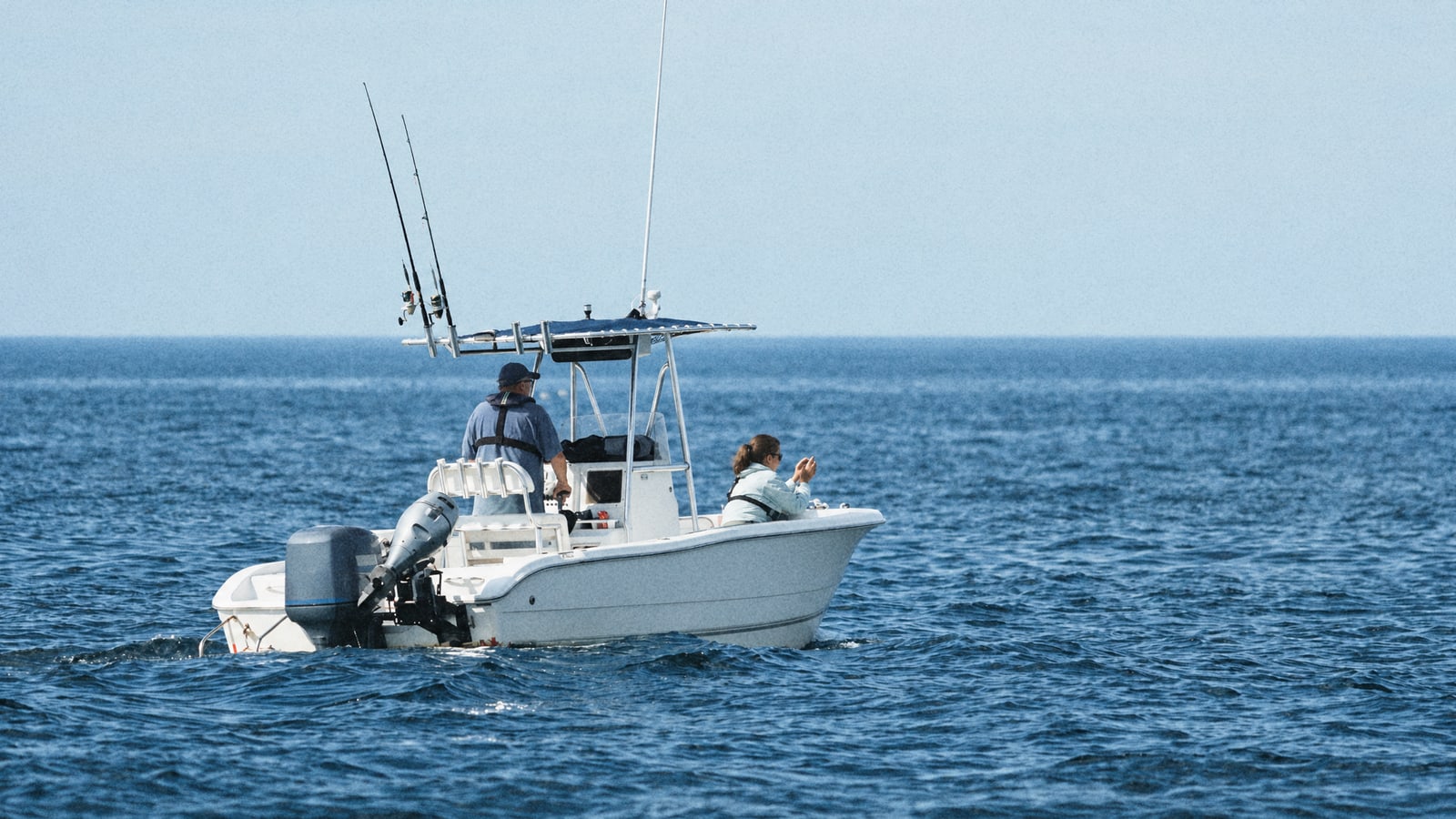
A lampuki trip in Malta is a trolling day. The boat runs out from the harbour to open water, sets a spread of lures behind it and cruises at a few knots while the crew watches for floating weed, debris and diving birds, because lampuki gather under anything that floats. When a fish takes, a rod bends in its holder, someone shouts, and the skipper hands it to you. The season opens on 15 August and closes on 31 December, and as of late October 2026 you are in the last good stretch of it: most years the fishing holds up well into November, then tails off as the water cools.
If you have never been on a charter before, that is the whole shape of it. You do not need to know how to cast, and you do not need a licence of your own. The rest of this post is about the details that make the day better: how far you go, how long you need, what you can keep and how to pick the boat.
Where the lampuki are and how far you travel
Lampuki are a surface fish of open water. Around Malta the commercial boats set kannizzati, floating rafts anchored offshore that draw the fish in, and the kannizzati zones belong to the licensed fishermen who lay them. A charter does not fish someone else’s raft. It looks for its own fish: natural floating cover, weed lines, a temperature change, birds working the surface.
That usually means a run out. Fishingmalta, who sail from Ta’ Xbiex, say in their listing that dorado and albacore usually take a trip of 10 to 20 miles offshore, though some days bring the fish much closer to shore, and that you can even head round to the other side of the island when it is fishing better there. Expect twenty minutes to an hour of running before the lines go in, more if the skipper decides the fish are on the far side.
Wind decides a lot of this. A north-westerly in late autumn can make the open water uncomfortable, and a good skipper will either fish the sheltered side or move your trip to another day. Our guide to what happens when a Malta fishing trip is cancelled for bad weather explains how that works on Reelzy.
What happens when they bite
A hooked lampuka is a show. It jumps, runs sideways, and changes colour from blue and green to bright gold as it comes close to the boat. They often travel in groups, so where there is one there are frequently more, and a good patch can mean several rods going in a few minutes. Crews will sometimes keep a hooked fish in the water near the boat for a moment so the rest of the school stays close.
The fish are not huge by offshore standards, which is exactly why lampuki are such a good first offshore trip. A child or a first-timer can bring one in on a light trolling rod with a bit of help, and nobody spends forty minutes strapped into a fighting chair. If you want a heavier fight, ask about combining the day with something else: a September or October trip can mix surface trolling for lampuki with a session over the reefs for amberjack or dentex.
Between bites there is a lot of watching. Bring a hat, sunglasses and sun cream, wear non-slip shoes, and pack a jacket for the run out, because even a warm October morning is cold at speed. If you get seasick, take something the night before, not on the quay.
Can you keep lampuki, and how many
This is the question Maltese anglers ask first, because lampuki are a dinner fish. Lampuki pie is an autumn tradition on the islands, and plenty of visitors want to take a couple back to the apartment.
The recreational limits, as reported by MaltaToday when they came in, are 10 kg or five lampuki per person per day, whichever comes first, with a minimum size of 35 cm. Anything smaller goes back. The limits come from an EU and GFCM framework and can change from one season to the next, so check the current position with the Department of Fisheries and Aquaculture or simply ask the skipper, who will know.
There is a second rule that matters more than the bag limit. A recreational boat needs its own authorisation from the Department to target lampuki, the same way it does for bluefin tuna. That authorisation belongs to the boat, not to you, so if lampuki are the reason you are booking, ask the captain whether they hold it before you pay. Who keeps what on a Malta charter in general is covered in can you keep the fish on a Malta fishing charter.
Which boats to look at
Not every Malta boat runs this kind of trip, and none of our captains uses the word lampuki in their listing, so read what each one says it fishes for and confirm in the chat. Three boats on the mahi mahi in Malta page are the natural starting point.
Fishingmalta is the one that names dorado in its own words. Skippers Chris and Daryl fish from a 33 foot Targa out of Ta’ Xbiex, mix trolling with bottom fishing, and include gear, bait, permits and drinks. They are also the only Malta boat we list that sells shared seats, on a 4 hour trip from 12:00 and a 5 hour trip from 07:00, which suits a couple or a solo angler who does not want to charter a whole boat. For lampuki, the earlier and longer slot gives the crew more time offshore.
Adele II, an Axopar 37 from Floriana, is the fast option. The listing says it is licensed to fish out to 12 nautical miles and has air conditioning, which matters more than it sounds on a long day. It runs long trips with pickup and drop-off included, and guests keep their catch.
Aquaholic in St. Paul’s Bay is Captain Paul’s Laguna II. He is a commercial fisherman who asks for your bucket-list species and gives you honest expectations for the day, which is exactly the conversation to have about lampuki in a slow week. The crew cleans and fillets the catch.
All six of our live Malta boats are on the Malta fishing charters page if you want to compare departure points.
Half day or longer
Trolling is a numbers game: the more hours your lures are in the right water, the better your chances. A short trip spends a good share of its time running out and back. If lampuki for the pan are the point, pick a trip of five hours or more, start early, and tell the skipper that is your goal so they plan the run around it.
A shorter trip still works if you are staying near the harbour, have children with you, or would be equally happy with whatever the reef gives up. On a cruise call, our guide to a fishing trip from Valletta cruise port shows which slots fit a port day.
When to go in the season
The fish can be caught from mid August. For anglers on a charter, late August to November is usually the best of it: the water is still warm, the summer crowds have thinned and the sea is calmer than it will be in January. December is still open but less reliable, and the season closes on 31 December. After that the target changes to dentex, amberjack and squid, which our Malta winter fishing guide covers. The full year, species by species, is in the Malta fishing seasons guide.
What to ask before you book
Send the skipper a short message in the listing chat. Ask whether the boat holds the lampuki authorisation this season, how far out they have been finding fish in recent days, how long they recommend, and whether you can keep a few for dinner and have them cleaned. Ask too what they fish for if the lampuki do not show, because a good crew always has a second plan.
Then pick a date on the calendar of the boat that answered best. Captains reply in the Reelzy chat, and you can settle the meeting point, the length of the trip and the fish you are after before you pay.
Leave a Reply