
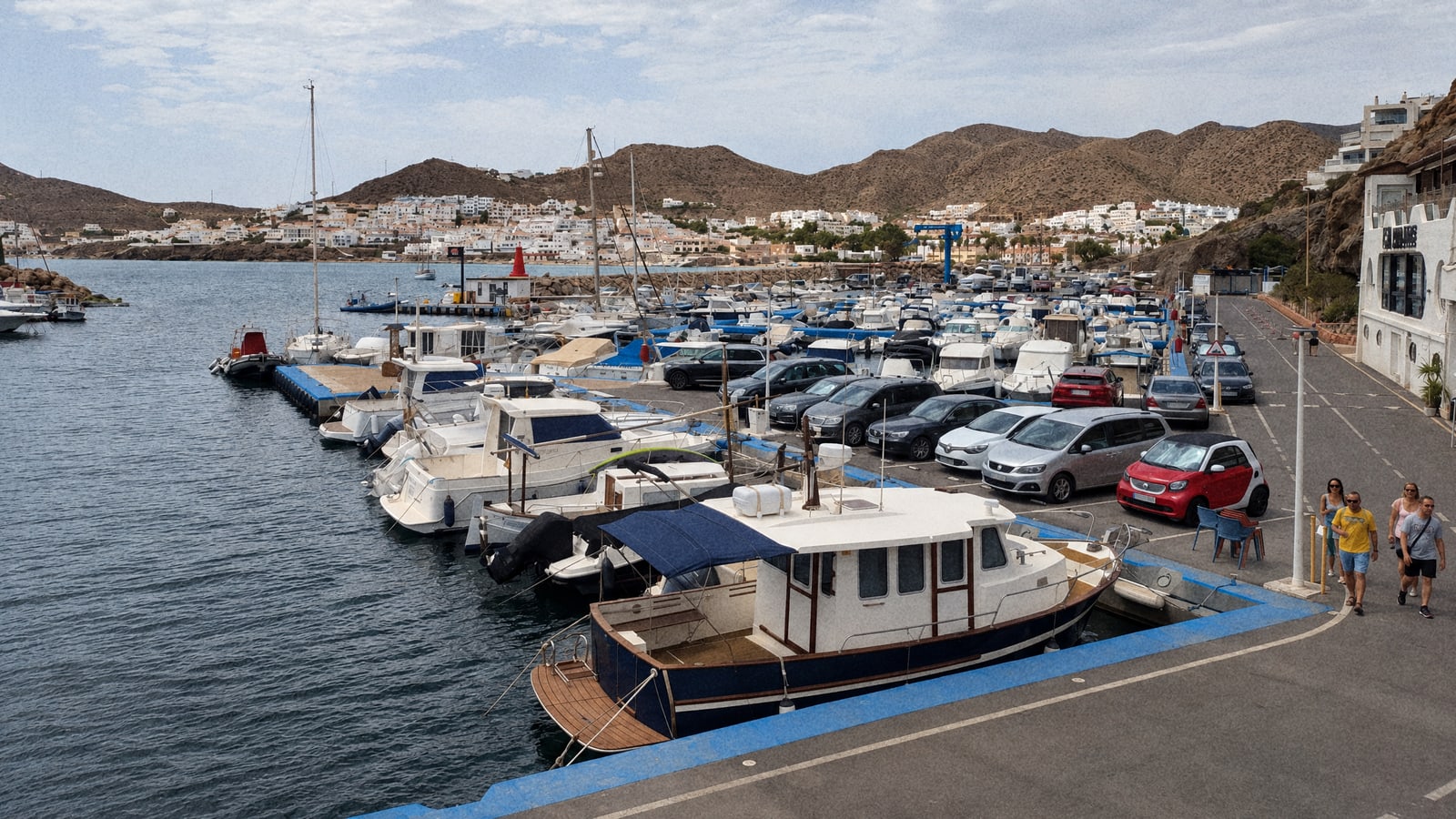
If the skipper calls off your fishing trip off Málaga or Marbella because the levante or the poniente makes the sea unsafe, a Reelzy booking gets back everything you paid online, or the trip moves to another day at no extra cost. You choose which. The decision is the skipper’s, usually made the evening before or at the pontoon before 08:00, and it rests on the AEMET coastal forecast and what the skipper sees at the harbour mouth. The one mistake to avoid: if the skipper suggests you cancel because of the wind, do not cancel the booking yourself. Write to Reelzy support first so it is recorded as a weather call.
Why a weather call is different from you cancelling
Every listing carries a cancellation policy, flexible, moderate or strict, and its deadlines apply when the guest changes plans. A trip the captain cancels for safety sits outside those deadlines. Our cancellation policies put it simply: when the weather is unsafe, at the captain’s discretion, the guest gets a full refund of everything paid or can reschedule at no additional cost.
The trap is a polite WhatsApp from the skipper the night before: “tomorrow levante, better to cancel”. If you then press cancel in your booking, the system sees a guest cancellation inside the deadline, and on a moderate or strict policy that can cost the deposit. Reply to the skipper, then tell us in the support chat that the trip is off for wind. We record it as the captain’s call, and the refund or the new date goes through on those terms.
Levante and poniente, in plain terms
The Costa del Sol runs roughly east to west, so the two winds that matter blow along it rather than straight onshore. The levante is the easterly. It builds when pressure is higher over the Mediterranean than over the Atlantic and is squeezed through the Strait of Gibraltar, where it can blow hard for several days. The poniente is the westerly, the same funnel working the other way, with air coming in from the Atlantic side.
How often do they blow? A study presented by María Ortega and colleagues at the AEMET meteorology conference, based on a high resolution reanalysis of 2000 to 2018, sums up the older literature: around 165 days a year of levante in the Strait and around 60 of poniente (García de Pedraza, 1990). Their own count of the stronger, well defined events puts them at about 30% of days, with the most in winter and the fewest in summer. Their map puts the highest share of these days in the Strait itself, between Tarifa and Gibraltar, thinning out eastwards along the coast towards Málaga, but the band still reaches it.
That winter peak matches the sea itself. Puertos del Estado’s Málaga coastal buoy, running since 1985, shows the sea over one metre about 12% of the time in winter against about 1% in summer. Our guide to the calmest month for a fishing trip in Málaga has the season by season figures.
Who makes the call, and on what
There is no single wind speed that cancels every trip. The skipper weighs the forecast wind and its direction, the swell left over from the last blow, the size of the boat, the type of fishing booked and how the group is likely to cope. A moderate levante can still allow a few hours of fishing close in and in the lee of the coast, while the same forecast can rule out a long trolling run offshore. That is why two Marbella boats sometimes make different calls on the same morning.
What the skippers read first is AEMET, Spain’s state weather agency: its coastal waters forecast for the Málaga coast and its Meteoalerta warnings. It helps to know where the warning levels sit. For Mediterranean coastal zones, AEMET’s threshold annex (version of 31 May 2022) issues a yellow coastal warning for wind of 50 km/h, force 7, or a combined sea producing 3 metre waves; orange for 60 km/h, force 8, or 4 metres; and red for 90 km/h, force 10, or 7 metres. A yellow warning is far beyond what a small charter boat goes out in. Most trips are called off on days with no warning at all, because a sea that is fine for a cargo ship is not fine for six people on a 30 ft boat. If you see any coastal warning for the Málaga coast on your date, expect the call.
What you will hear, and when
With a 08:00 departure, the usual pattern is a message the evening before if the forecast is clearly bad, and a final word at the marina in the morning if it is borderline. Skippers on this coast also watch for a sudden change of wind. Two forecasters of Spain’s weather service, Sánchez-Laulhe and Polvorinos, described in 1999 how the levante can arrive abruptly on the northern Alborán coast, which is this coast, after a westerly: in the strongest cases with gusts above 20 metres a second, over 70 km/h, and a near instant drop in temperature of about 8 °C. A skipper who brings you back early on a morning like that is doing the job.
A shorter or changed trip is not a cancellation. If you accept two hours of fishing close to the port instead of a full trolling day, you have taken the trip. If you would rather keep the plan you booked for another day, say so at the pontoon, before the lines are off.
The three boats on Reelzy on this stretch all set their trips to leave at 08:00, which helps, because the afternoon breeze tends to add to whatever wind is already blowing:
- La Faeton Blue Marlin sails from Puerto Deportivo Virgen del Carmen in Marbella, takes up to 12 guests and offers trips from 2 to 10 hours, including trolling days.
- La Starfisher leaves from Puerto Pesquero La Bajadilla, takes up to 8 and runs 3 to 9 hours.
- Blue Tide Marbella, also from La Bajadilla, takes up to 9 and runs 3 to 8 hours.
All three are private charters, so a move to another day concerns your group only, not a boat full of strangers.
Planning a Costa del Sol trip around the wind
The best protection costs nothing: book the fishing for early in your stay. If the levante blows on day two of a week, there are four or five days left to move to. If the trip is on your last morning, the only option left is the refund.
From November to March, when the reanalysis puts most of the strong wind days, treat a spare day as part of the booking. In summer and early autumn a cancellation is rarer, but a three day levante can still arrive in any month, so the same habit is worth keeping.
If calm water matters more than a long day, choose a three or four hour morning trip. It is back before the wind usually fills in, and it suits a first timer or anyone who gets seasick. Our guide to a first fishing trip from Málaga covers what happens on board.
Look at the forecast yourself two or three days out, but read it through the skipper’s eyes. A sunny levante day can feel perfect on the beach at Marbella and still mean a short, choppy sea a mile out.
What to ask the skipper before you book
A few questions settle most of this before money changes hands. Which wind usually stops you going out, and from what strength? If the sea is up on our date, do you prefer to fish closer in for a shorter session or to move the whole trip? How late can you tell us, given that we leave at 08:00? Can we hold a second date later in the week in case the first one is blown out? You can send all of them through the chat on the listing, and the answers stay in writing next to your booking.
Book with a spare day
Pick a morning early in your holiday, keep one later day free, and message the skipper the evening before. Start with Blue Tide Marbella or La Starfisher for a short morning, La Faeton Blue Marlin for a bigger group or a longer day, or see every boat on the Málaga charters page. If the wind does win, the skipper calls it, you tell us, and you choose the refund or the new date.
FAQ
What happens if my Málaga fishing trip is cancelled for wind? If the skipper cancels because the levante, the poniente or the sea makes it unsafe, a Reelzy booking gets a full refund of everything paid online, or the trip moves to another day at no extra cost. You choose which.
Should I cancel the booking myself if the skipper says the wind is too strong? No. Tell Reelzy support in the chat that the skipper has called the trip off for weather. If you cancel yourself, the listing’s cancellation policy can treat it as a guest cancellation and the deposit may be lost.
How often does the levante blow? The older literature, summed up by Ortega and colleagues for AEMET, gives around 165 days a year of levante in the Strait of Gibraltar and around 60 of poniente. Strong events are most frequent in winter and least frequent in summer.
Which forecast do Málaga skippers use? AEMET’s coastal waters forecast for the Málaga coast and its Meteoalerta warnings. A yellow coastal warning starts at force 7 wind or 3 metre waves, well above what small charter boats go out in.
Leave a Reply