
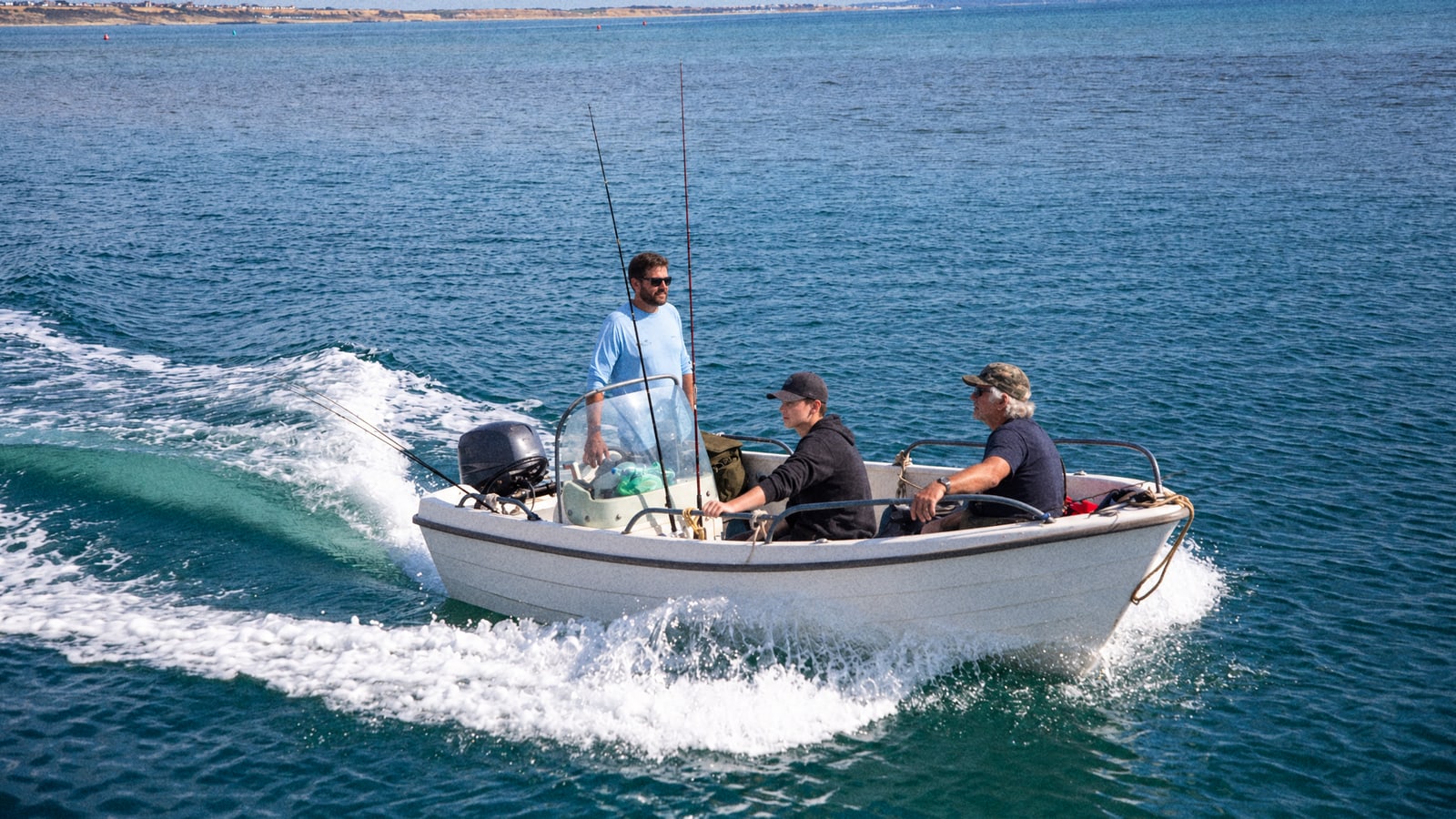
In 2026 a recreational angler in English waters may keep three bass a day (minimum 42 cm, catch and release only in February and March) and, for the first time, no more than three pollack a day in the English Channel, Celtic Sea and west of Scotland. Both limits are per person, so on a charter boat the skipper cannot pool them or keep extra fish for the group. Everything beyond your three goes back.
That is the whole rule in two sentences. If you are booking a trip for this autumn or winter, the useful part is the date: bass can be kept right through November, December and January, and the release only season starts on 1 February. The rest of this guide explains where the limits came from, the local sizes that apply off Kent, how the limits play out on a day at sea, and what to ask the skipper before you book a wreck or bass trip.
The short answer
- European sea bass: three per angler per day, 42 cm minimum. Keep them in January and from 1 April to 31 December. From 1 February to 31 March every bass goes back.
- Pollack: three per angler per day, all year, in ICES areas 6 and 7 (English Channel, Celtic Sea, west of Scotland). Inside the Kent and Essex IFCA district the minimum size is 30 cm.
- Other species: local minimum sizes still apply, such as 35 cm for cod and 27 cm for whiting off Kent.
The bass figures come from the 2026 bass guidance for recreational anglers in England. The pollack limit was agreed between the UK and the EU in the December 2025 fisheries negotiations and confirmed by Defra in a written answer in January 2026. Rules are reviewed every year, so check again before a trip.
What changed for bass
Until 2025 the recreational limit was two bass a day. The Angling Trust reported in December 2025 that anglers would be allowed three, a change that followed signs of recovery in the stock after years of tight management.
The other parts of the bass rule did not move:
- 42 cm minimum. Measure from the tip of the snout to the end of the tail with the mouth closed. A fish that only makes 42 cm on a stretched tape goes back.
- Release only in February and March. You can still fish for bass in those two months, but every fish must be returned.
- Per angler, per day. Three is your personal ceiling, not a boat total.
For a charter guest the practical effect is small but welcome: on a good autumn day off Kent or Sussex, a third fish for the table is now legal. Many skippers still encourage keeping one good bass and releasing the rest, because bass grow slowly and the fish you put back is next year’s fishing. If you do keep one, our guide on what to do after catching a sea bass covers killing, bleeding and icing it so it tastes as good as it should.
What changed for pollack
Pollack is where 2026 is genuinely different. According to the Angling Trust, scientific advice in 2025 pointed towards a full closure of the fishery for both commercial and recreational boats. That did not happen. Instead the UK and the EU agreed a mandatory recreational bag limit of three pollack per person per day across ICES areas 6 and 7, the English Channel, the Celtic Sea and the waters west of Scotland. The UK government also resisted an EU proposal for a two fish limit and a recreational closed season.
Two details matter for anglers:
- It replaces a voluntary scheme. Before 2026 many skippers followed the voluntary Pollack Pact guidelines. The three fish limit is now law, not good manners.
- It is set by sea area, not by port. The limit follows the ICES area you are fishing in. Ask the skipper where the day’s marks are if you are unsure, especially on boats that fish both the Channel and the southern North Sea.
The decision was not popular with everyone. The Angling Trust wrote to the fisheries minister in December 2025 about the cost to charter skippers in the South West, where groups travel every year for wreck pollack, and Defra and the Angling Trust held sessions in spring 2026 to explain how the limit works. On the commercial side the Marine Management Organisation has also been consulting on lower catch limits for Pollack 7, so pressure on the stock is being managed from both ends.
Anglers fishing from Ireland work to the same number: Irish rules giving effect to the EU measure also set three pollack per angler per day, with catch and release allowed after that.
How the limits play out on a charter day
Most UK charter days are not built around a single fish, and the new rules reward boats that plan for that.
Wreck days in the South West. On a full day over Channel wrecks a group can reach its pollack limit by mid morning when the fish are feeding. After that the day does not end: it becomes catch and release for pollack, and many skippers move to marks that hold cod, ling, conger or bream. If keeping fish is important to your group, say so when you book and ask what the plan is once everyone has three pollack.
Mixed bass and pollack trips. Where both species are on the cards, an angler can legally keep three of each on the same day, outside the bass release season. A mixed day spreads the catch across species and keeps everyone busy.
Inshore bass trips. Shorter trips off Kent and Sussex target bass on drifts over reefs and banks, often with smoothhounds, rays and mackerel in the mix. The extra bass makes these trips slightly more rewarding for anglers who want a fish to take home, and the 42 cm rule makes a tape measure on board essential.
Release well. A fish going back needs wet hands, support under the belly and a quick unhooking. Barbless or crushed barb hooks help, and most experienced skippers will show you how if you ask.
Fishing off Kent: local sizes and the 51° line
Inside six nautical miles the Kent and Essex IFCA sets its own minimum sizes through its Minimum Sizes Byelaw, and they apply to anglers as much as to commercial boats. The ones that matter on a Ramsgate or Thanet trip:
- Bass 42 cm, the same as the national rule.
- Pollack 30 cm.
- Cod 35 cm, which is the number to remember on a winter trip.
- Whiting and plaice 27 cm, sole 24 cm.
- Mackerel 30 cm north of 51° latitude and 20 cm south of it.
That last line shows something useful. The IFCA treats waters north of 51° as ICES area 4c, the southern North Sea, and waters south of it as area 7d, the eastern Channel. Ramsgate sits north of 51°, so a day off Thanet is mostly fished in the North Sea, while the national pollack limit is written for areas 6 and 7. Pollack are not the main target off Ramsgate anyway, but if a skipper runs south towards the Channel, the three fish limit is the safe ceiling to work to. Ask, and keep three as your own rule.
In practice an autumn or winter trip out of Ramsgate is built around bass while they are still about, then cod, whiting and rays as the water cools. Our guide to winter fishing trips from Kent covers what the skippers fish for from November, and the Ramsgate cod season guide explains the wreck days.
What about 2027?
The 2026 figures came out of the UK and EU fisheries talks in December 2025, and the 2027 limits will be set the same way, so expect news on bass and pollack in December 2026. Until new rules are published, the 2026 limits stand, which means three bass a day through 31 January 2027 and catch and release only from 1 February. If you are booking a spring trip, check the bass guidance on GOV.UK in the new year before you plan to keep fish.
Common questions
Can I keep a bass in November or December 2026? Yes. Up to three per angler per day, each at least 42 cm, until 31 January 2027.
Is there a minimum size for pollack? There is no national figure in the 2026 bag limit, but local byelaws set one. In the Kent and Essex IFCA district it is 30 cm.
Can the skipper keep fish for the group? No. Bag limits are per angler, and the crew cannot take extra fish on your behalf.
Do the pollack rules apply off Ramsgate? The limit covers ICES areas 6 and 7. Waters off Ramsgate are north of 51°, which the Kent and Essex IFCA treats as area 4c. Treat three as your ceiling anyway and ask the skipper where the day’s marks are.
Where to fish under the 2026 rules
These Reelzy boats fish the species covered above. Check each listing for trip lengths and what is included.
- Fishing with Andy, Plymouth. Full day charters from about 07:15 to 17:00, bookable by the seat or as a whole boat for up to 8, with pollock, cod, ling and conger on the target list and wrecks among the grounds fished. This is the boat to ask about the pollack limit and what a wreck day looks like after it.
- HUSSLER, Ramsgate. A boat for up to six anglers on shorter trips with tackle and bait supplied. Its October 2026 catch report listed bass to 5lb, a skate and plenty of smoothhounds.
- Kestrel Warrior, East Sussex. Up to 10 anglers, rod hire and a tackle shop aboard, and free gutting and cleaning of the fish you keep.
- Lady Ann, Kent. Up to 10 guests, bait and tackle supplied, and fish prepared for the table before you step off.
You can also browse every boat that lists European sea bass as a target, or all fishing charters in the United Kingdom.
Do you also need a licence?
No licence is needed for sea fishing from a boat in England, so the bag limits are the main rules a charter guest has to know. Freshwater is different, and so are some other parts of the UK. Our guide to fishing licences on UK charter boats sets out where a licence is needed and where it is not.
Before you book a bass or pollack trip
- Check the date. No bass may be kept in February or March.
- Ask the skipper what the boat does once everyone has three pollack, and whether bass are realistic on that trip.
- Agree as a group how many fish you actually want to take home. Three each is a ceiling, not a target.
- Pack a tape measure, a cool box with ice, and a bag for the fish you keep.
- Ask about fish care. Some boats gut and clean your catch, others leave it to you.
The rules in 2026 shape the day rather than spoil it. Pick a skipper who plans for the limits, and a wreck or bass trip on the English coast is still one of the best days out in UK sea fishing. Start with the Ramsgate charters or the boats out of Plymouth, and ask the skipper what has been biting this week.
Leave a Reply