
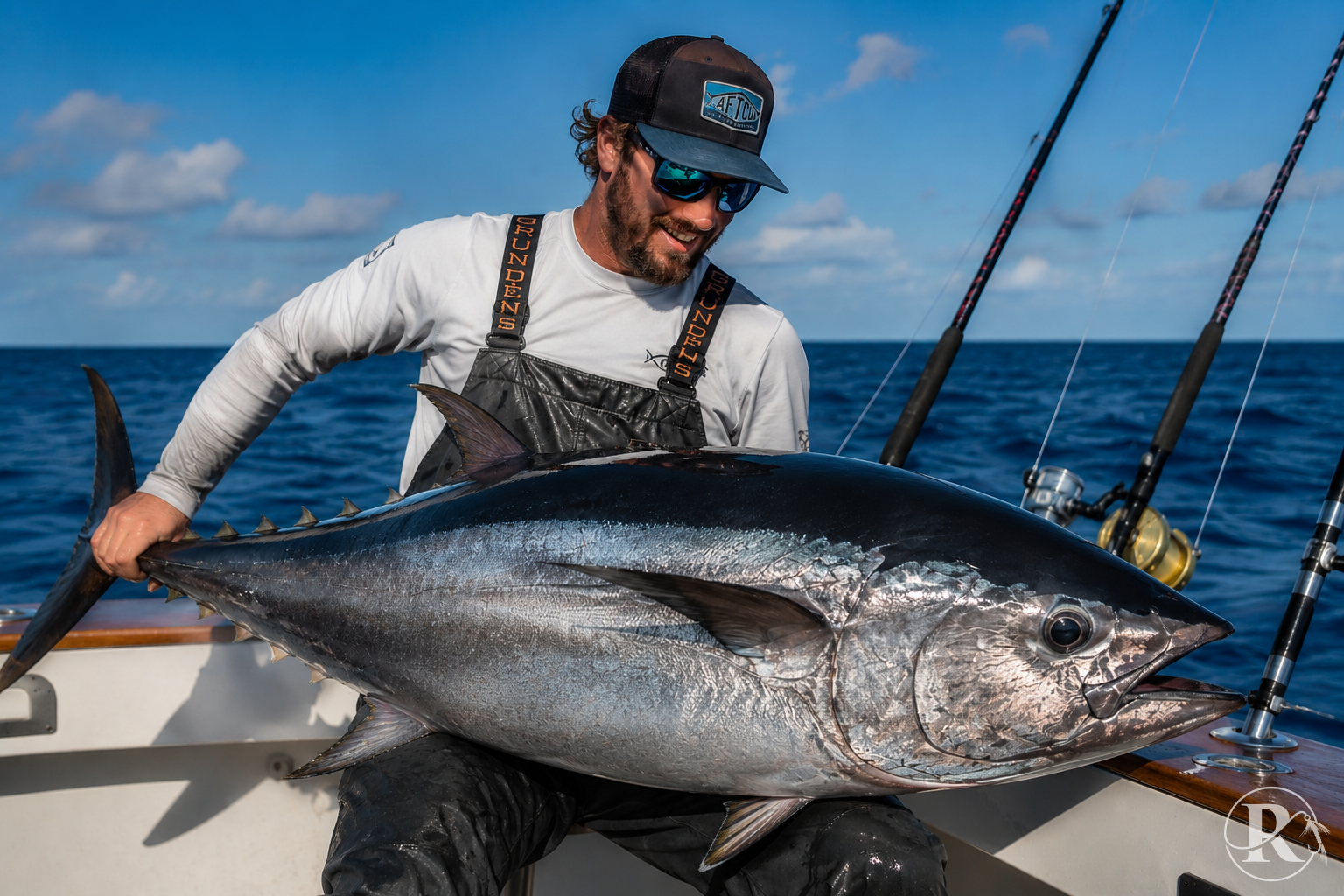
Tuna fishing in the USA depends heavily on season, water temperature, migration patterns, and bait movement. Tuna are highly migratory fish that travel long distances along both the Atlantic and Pacific coasts, following warm currents and active feeding zones.
Many anglers schedule a fishing trip months in advance to align with the most productive tuna fishing season. During peak periods, bluefin tuna and yellowfin tuna feed aggressively, creating excellent offshore fishing opportunities.
Across most regions, the tuna fishing season runs from late spring through early fall. July and August are often considered the strongest months for offshore tuna activity, especially when water temperatures stabilize and bait schools become concentrated.
What You Need to Know About Tuna Fishing
Tuna fishing is a specialized form of offshore sport fishing focused on powerful pelagic species such as bluefin tuna, yellowfin tuna, blackfin tuna, and albacore. These fish are known for their speed, endurance, and long-distance migrations.
Most anglers fish for tuna aboard charter boats equipped for deep sea fishing. Trips commonly run between 6 and 12 hours offshore, although some extended excursions travel farther into federal waters in search of larger fish.
Experienced captains often monitor:
- Water temperature breaks
- Chlorophyll charts
- Bait movement
- Bird activity
- Offshore current lines
These factors help identify productive feeding grounds where tuna are actively hunting.
Before Your Trip
- Bring a valid saltwater fishing license if required
- Confirm whether your charter includes licensing
- Prepare for long offshore runs
- Expect changing sea conditions during the trip
- Use live bait or trolling methods depending on fish behavior
Florida Fishing License Rules & Exemptions
Florida separates freshwater and saltwater fishing licenses, and the rules depend on where and how you fish. Many offshore tuna charters include licensing through the vessel, but anglers fishing independently may still need a permit.
Outside the USA the rules are different again. If you are chasing bluefin in the Mediterranean, our guide to fishing licences in Spain explains what a charter guest needs on the Costa del Sol and in Gibraltar, and the boats listed on the Gibraltar and Málaga charter pages fish those waters.
Who Can Fish Without a License in Florida?
Florida offers several exemptions for residents and specific fishing situations:
- Youth: Anyone under 16 years of age
- Florida Seniors: Residents age 65 or older with a valid Florida Driver’s License or state-issued ID
- Charter & Pier Guests: Anglers fishing from a licensed charter boat or licensed fishing pier
- Military: Florida residents who are active-duty military and home on leave for 30 days or less
- Private Freshwater Ponds: Fishing in a privately owned man-made freshwater pond of 20 acres or less that is not connected to public waters
- Disability Exemptions: Residents holding a valid Florida disability or long-term prohibited species license
Important Note About Private Property Fishing
Florida’s private property exemption generally applies only to freshwater ponds. Anglers fishing from private docks in saltwater canals, bays, or coastal waters still usually need a valid saltwater fishing license.
Florida Shoreline Fishing License
Florida residents can apply for a free shoreline saltwater fishing license. This permit allows residents to fish from shorelines, bridges, docks, and piers without purchasing a regular saltwater fishing license.
This option is popular with anglers targeting species like snook, trout, tarpon, or mackerel from beaches and coastal structures.
Tuna Fishing Calendar
Massachusetts
Massachusetts is one of the top destinations for Atlantic bluefin tuna. The season peaks in late summer around Cape Cod, where anglers target giant bluefin in productive offshore waters. This fishery attracts experienced anglers looking for large trophy fish.
New York
In New York, especially near Montauk, bluefin tuna fishing becomes active in mid-summer. Tuna migrate along the Atlantic coast, and anglers can encounter both bluefin and yellowfin tuna through early fall.
Maryland
Maryland offers consistent offshore tuna fishing opportunities during summer. The season usually begins in late spring and becomes strongest in July and August when offshore temperatures improve.
North Carolina
North Carolina is known for early Atlantic bluefin tuna activity. Winter bluefin runs attract anglers offshore, while warmer months produce yellowfin tuna and other pelagic species farther offshore.
Florida
Florida provides year-round tuna fishing opportunities, especially in the Gulf of Mexico and Atlantic offshore waters. Yellowfin tuna fishing is productive during warmer months, while blackfin tuna are available in several regions throughout the year.
Texas
Texas anglers commonly target yellowfin tuna offshore in the Gulf. Productive fishing conditions typically develop between late spring and early fall, depending on currents and bait movement.
Washington
Washington’s tuna fishery focuses mainly on albacore. The season is relatively short but can become highly productive when warm Pacific currents move closer to shore.
California
California is one of the best locations for Pacific bluefin tuna. In Southern California, tuna activity often peaks between early summer and fall. During strong migration periods, bluefin tuna may move surprisingly close to the coastline.
Hawaii
Hawaii offers year-round tuna fishing opportunities. Anglers commonly target yellowfin tuna, locally known as ahi, along with other offshore pelagic species in deep Pacific waters.
Tuna Fishing Techniques
Successful tuna fishing relies on adapting techniques to fish behavior, bait activity, and sea conditions. Captains often switch methods throughout the trip depending on how tuna are feeding.
Common tuna fishing techniques include:
- Trolling artificial lures offshore
- Fishing live bait near feeding schools
- Chunking during slower feeding periods
- Monitoring temperature breaks offshore
- Adjusting trolling speed and lure depth
Bluefin tuna are among the strongest offshore fish in the world. To catch bluefin successfully, anglers use heavy tackle, reinforced reels, and strong braided lines capable of handling long, demanding fights.
The fishing experience often involves teamwork between the angler, captain, and crew, especially when larger tuna stay deep for extended periods.
Tuna Fishing Season FAQs
When is the best tuna fishing season in the USA?
The best tuna fishing season depends on the region, but most offshore activity peaks between late spring and early fall. July and August are commonly the most productive months.
What types of tuna can I catch?
Common species include bluefin tuna, yellowfin tuna, blackfin tuna, and albacore. Each species behaves differently depending on location, water temperature, and migration patterns.
Do I need a charter for tuna fishing?
Many anglers choose a charter because offshore tuna fishing requires specialized boats, electronics, and safety equipment. Platforms like Reelzy help compare captains and offshore boats across the USA.
How long does a tuna fishing trip last?
Most offshore tuna trips last between 6 and 12 hours. Extended trips may run longer when targeting trophy fish farther offshore.
What affects tuna fishing success?
Water temperature, bait availability, migration patterns, and offshore conditions all influence tuna activity. Experienced anglers and captains monitor these factors closely throughout the season.
Leave a Reply