
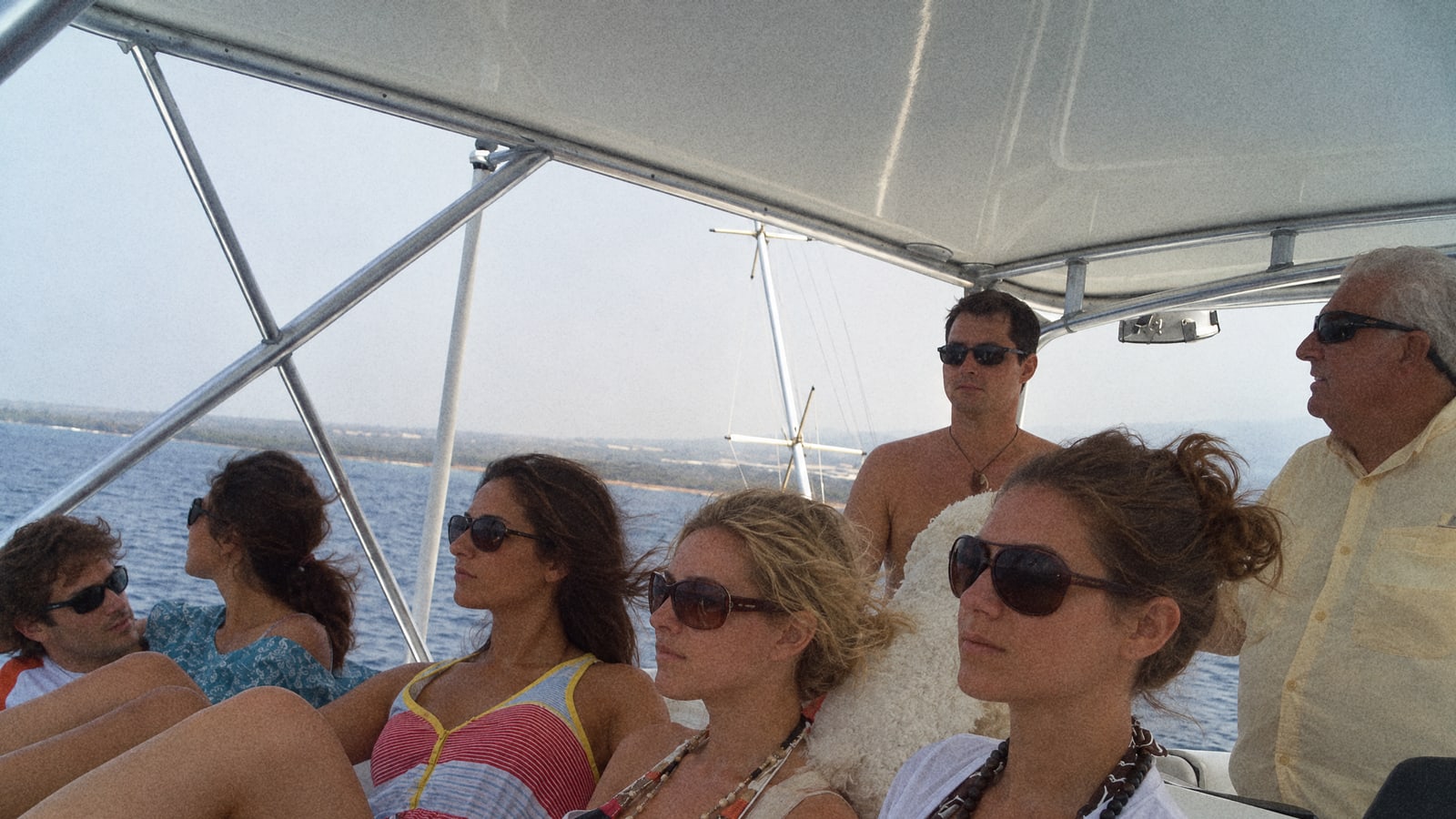
If you get seasick, you can still go fishing in Mauritius. Pick a morning trip from the west or north-west coast (Trou-aux-Biches, Grand Baie, Pointe aux Piments) where the island shelters you from the trade wind, or a lagoon trip that never leaves the reef, take a motion sickness tablet before you board rather than after you feel ill, and sit low in the middle of the boat with your eyes on the horizon. Most people who feel queasy offshore feel fine in the lagoon.
The short answer
The single biggest factor is where the boat fishes, not which boat it is. Inside the reef, the water is shallow and the coral takes the ocean swell, so the boat sits almost still. Outside the reef, the seabed drops to hundreds of metres within a few miles and you are on the open Indian Ocean, where a long swell rolls under the boat all morning. Big game trips for marlin, tuna and wahoo happen out there, and that is where seasickness happens.
So the choice is simple: if you are unsure, start with a lagoon or light tackle trip, and if you want the open ocean, stack the odds with the right coast, the right month and the right preparation. The rest of this guide covers each of those.
Why it happens and why the morning matters
Seasickness is a mismatch: your inner ear feels the boat moving while your eyes, fixed on a reel or a phone, say you are still. It is worse when the boat drifts or idles side on to the swell, which is exactly what happens when a crew stops to bottom fish or jig. Trolling, when the boat keeps moving forward into the sea, is usually easier on the stomach than sitting still.
Mauritius charters start early for a reason that helps you. Captains leave at first light because fish feed near the surface in the first hours, and because the trade wind usually builds through the day. Baywatch at Trou-aux-Biches, for example, lists a 6 a.m. start and a return around noon, and Flying Kiss at Pointe aux Piments starts at 5:30 and is back by 12:00. The calmest water of the day is the water you fish.
Which coast is calmer
Mauritius sits in the south-east trade winds. They blow most of the year and they are strongest in the southern winter. That gives the island a weather side and a sheltered side:
- West and north-west (Trou-aux-Biches, Grand Baie, Pointe aux Piments, Le Morne): the lee of the island. The wind comes over the land, so the sea close to shore is flatter. This is where most of the island’s charter boats are based, including the seven Trou-aux-Biches boats on Reelzy.
- South-east (Mahebourg, Blue Bay): the weather side. The wind comes straight off the ocean, and outside the reef the sea is usually rougher. Inside, though, Mahebourg has the largest lagoon on the island, and that changes the picture (see below).
The short boat ride out also matters. From the north-west, deep water is close to shore, so a half-day boat reaches the fishing grounds quickly instead of pounding through chop for an hour. Our guide to a half-day trip from Grand Baie walks through a typical morning hour by hour.
Which months are calmer
Roughly, the Mauritian year splits in two:
- Summer, about November to April: lighter trade winds and often calm mornings, which suits nervous stomachs. It is also hot and humid, and January to March is cyclone season, when trips can be cancelled at short notice. A cancellation for weather is the captain doing the job properly, not bad luck.
- Winter, about May to October: the trade wind is stronger and steadier, and swells from storms far to the south reach the island. Plenty of good fishing happens in these months, but a seasick-prone guest should book the earliest start and keep a flexible second date.
Our Mauritius fishing seasons guide covers which fish are around in which months, so you can match a calm month to the species you want.
The lagoon: the safe choice that still catches fish
If you have been seasick before, the lagoon is not a second-best trip. It is a different kind of fishing: lighter rods, casting, light trolling and bottom fishing in clear shallow water, with fish you actually feel on the line.
The Small Game Fishing trip in Mahebourg is built around exactly this. The listing describes light tackle fishing in the south-east lagoon, the largest in Mauritius, with casting, light trolling and bottom fishing, and includes gear and drinks. The reef shelters it from the open swell, so even on the windy side of the island the boat sits in protected water. On a breezy day you will still feel wind chop, but not the slow, deep roll that makes people ill offshore.
On the west coast, several captains run both kinds of trip and will tailor the day if you ask. Fishing on Ivan at Trou-aux-Biches lists trips of 4 to 9 hours and techniques from bottom fishing and handline to trolling and big game, and says plainly that Captain Sebastian shapes the trip around what you tell him. That is the conversation to have: say you get seasick, and ask for a shorter morning that stays closer to shore or inside the reef if the sea is up.
If you want the open ocean anyway
Big game fishing is the reason many people book in Mauritius, and plenty of people who worry about seasickness do it without trouble. What helps:
- Book a half day, not a full day. Four to six hours is a test you can pass. Eight hours on a rolling sea is not. Last Cast in Grand Baie, for example, offers half-day, full-day and sunset trips on a Baymaster 215.
- Book a morning. The water is calmest early and the wind builds after 10 a.m.
- Keep a second date free. If the captain says the sea is rough on your first date, move the trip. Mauritius captains watch the forecast closely and will tell you honestly.
- Ask about the boat. A bigger, heavier boat moves less in a swell than a small one. Ask the captain on the listing chat what they would choose for a guest who gets seasick.
What to do the night before and on the morning
- Take a tablet before, not during. Over-the-counter motion sickness tablets work much better taken before the boat moves than once you feel ill. Read the packet for timing (some are taken the evening before, others an hour before departure) and ask a pharmacist which one suits you, especially if you take other medicines or one makes you drowsy. Pharmacies in Mauritius sell them, but buy them before the trip, because you leave before the shops open.
- Sleep properly and go easy on alcohol the night before. A 5 a.m. start after a late dinner with cocktails is the most common recipe for a bad morning.
- Eat a light, plain breakfast. An empty stomach makes nausea worse. Toast, a banana or crackers are better than nothing and better than a fried breakfast.
- Drink water and pack ginger. Ginger biscuits or sweets are a mild help for many people. Our what to bring list for a Mauritius charter has the rest of the bag.
On the boat
- Sit low and near the middle. The middle of the boat moves least. The bow moves most.
- Look at the horizon. Not at your phone, not at the reel, not at the bait tray.
- Stay in the fresh air. Avoid the cabin and keep away from engine fumes at the stern when the boat idles.
- Keep busy. Holding a rod and watching the lures is better than sitting with nothing to do.
- Tell the crew early. If you start to feel unwell, say so. The crew has seen it many times. They can move you to a better spot, change the drift, or head for calmer water. Nobody minds, and it is much better than suffering in silence.
What to ask the captain before you book
Every listing on Reelzy has a chat with the captain. Before you pay, ask:
- Do you fish inside the lagoon, outside the reef, or both?
- How long is the trip, and can we come back early if someone is seasick?
- Where will you fish if the wind is up that day?
- Can we move the date if the sea is rough?
Clear, unhurried answers to these four questions tell you more than any review.
So which trip should you book?
If you have been seasick on boats before, book a lagoon trip like the Mahebourg light tackle day, or ask a west coast captain for a short morning close to shore. If you have never been on a small boat in the ocean, book a half-day morning trip from Trou-aux-Biches or Grand Baie, take a tablet beforehand and keep a spare date. You can compare every boat on the island, with what each trip includes, on the Mauritius fishing charters page.
Cover: "Going marlin fishing with the crew in Kona, Hawaii with FIRE HATT" by Chris Breikss, CC BY 2.0, edited (colour, retouching).
Leave a Reply