Starting your fishing journey is exciting, but it can also feel a bit overwhelming. With so many options for rods, reels, and lines, it’s easy to get lost. Choosing the right gear makes your time on the water much more fun and definitely helps you catch more fish. This guide will walk you through the basics so you can pick the perfect equipment for your first trip.
Once you understand the basic tackle and gear for different styles of fishing, you’ll be able to make better choices. Whether you’re hitting a local pond or heading out to deeper water, having the right setup is the first step to landing a catch.
Tips for Choosing a Fishing Rod
The fishing rod is really the heart of your gear. When you’re picking out your first one, keep these factors in mind:
Rod Length
Rods usually run anywhere from 6 to 12 feet long. Shorter rods, around 6 or 7 feet, give you more control and are perfect for making precise casts in tight spots. Longer rods, which are 8 feet or more, help you cast much further and are better for surf fishing. If you’re just starting out, a 7-foot rod is a great all-around choice for most environments.
Rod Power and Action
Rod power is just a measure of how much force it takes to bend the rod, ranging from ultralight to heavy. Action tells you where the rod actually bends. Fast action rods bend near the tip, while slow action rods bend further down. For a beginner, a medium-power rod with moderate action is a perfect balance. It’s sensitive enough to feel a bite but strong enough to handle different fish sizes.
Rod Material
Modern fishing rods are typically made from:
- Fiberglass – durable and flexible but heavier
- Graphite – lightweight and sensitive but more brittle
- Composite – combines the benefits of both materials
For beginners, a composite or fiberglass rod offers durability while you learn the basics. Many anglers start with a spinning rod as they’re easier to master than baitcasting models. A rod and reel combo designed for beginners can be an excellent way to ensure compatibility between these essential components.
How to Choose a Fishing Reel
Your reel works right alongside your rod to help you cast, retrieve, and land your fish. Picking the right one is a big part of your setup:
Types of Reels
There are several main types of fishing reels to consider:
- Spinning reels – easiest for beginners, mounted below the rod
- Spincast reels – very user-friendly with enclosed spool
- Baitcasting reels – more advanced, offering greater accuracy
- Fly reels – specialized for fly fishing
For most beginners, spinning reels are the best bet because they’re versatile and easy to use. They don’t tangle as easily as other types, so you won’t have to deal with as many “bird’s nests.” When you’re looking at reels, make sure the handle feels good in your hand and the motion is smooth.
Reel Size and Gear Ratio
You want a reel size that matches your rod and the fish you’re after. Small reels, like the 1000 to 3000 series, are great for trout. Larger reels are better for bigger game. The gear ratio tells you how fast the line comes back in. A medium ratio, around 6:1, works well for almost anything.
When you’re putting your combo together, make sure it feels balanced. A heavy reel on a light rod feels awkward and will tire you out quickly. Plenty of brands sell pre-matched sets that take the guesswork out of it for you.
Fishing Line for Beginners
The fishing line is your direct link to the fish. Choosing the right one can make a huge difference in how your day goes:
Main Types of Fishing Line
There are three primary types of fishing line to consider:
- Monofilament – versatile, affordable, and forgiving
- Fluorocarbon – nearly invisible underwater but less stretchy
- Braided line – strongest with no stretch, but more visible
Monofilament is usually the best choice for beginners because it’s affordable and easy to handle. It has a bit of stretch, which is actually helpful because it keeps the line from snapping if a fish hits hard or if you get snagged. It’s also much easier to tie knots with than other lines.
Line Weight and Strength
Line strength is measured in “pounds of test.” For general freshwater fishing, an 8 to 10-pound test is a great starting point. If you’re going after bigger fish or heading to the ocean, you’ll want something stronger. Just remember to check that your line matches your rod and reel specs.
Learning how to put line on your reel is a must-have skill. Try not to overfill it, leaving about 1/8 inch from the edge, and keep the line tight so it doesn’t tangle. You’ll also want to practice a few basic knots, like the improved clinch knot, so you can keep your hooks and lures secure.
Live Bait and Lures: How to Choose the Right One
The right bait can be the difference between catching a keeper and going home empty-handed. It all depends on what kind of fish you’re trying to attract:
Understanding Live Bait
Live bait is often the most effective option for beginners because it naturally attracts fish through movement, scent, and appearance. Common live bait options include:
- Worms and nightcrawlers – work for almost any freshwater fish
- Minnows – excellent for predatory fish like bass and pike
- Crickets and grasshoppers – great for panfish and trout
- Shrimp or cut bait – effective for many saltwater species, and the usual bait on bottom fishing trips
When you’re using live bait, where you put the hook matters. You want the bait to move naturally to get the fish’s attention. For worms, thread them on a few times. For minnows, try hooking them through the lips or just behind the fin.
Selecting Artificial Lures
Artificial lures come in countless varieties, each designed to mimic specific prey or trigger strike responses from fish:
- Soft plastics – worms, grubs, and creature baits
- Spinnerbaits and spoons – flash and vibrate to attract fish
- Crankbaits – mimic baitfish with diving capabilities
- Topwater lures – create surface commotion
Simple lures like plastic worms or small spinners are very effective for beginners. Try to match the size of your lure to the fish you want to catch. If a lure is too big, smaller fish won’t bite. If it’s too small, big fish might not even notice it.
The Basics of Fishing Hooks
Hooks are the final point of contact with the fish, so they’re incredibly important. Knowing which style and size to use will definitely help you land more fish:
Hook Types and Sizes
Fishing hooks come in numerous styles, each designed for specific purposes:
- J-hooks – traditional all-purpose hooks
- Circle hooks – self-setting and reduce gut-hooking fish
- Treble hooks – three points, commonly used on lures
- Weedless hooks – designed with guards to prevent snagging
Hook sizes can be confusing for beginners. They’re numbered in reverse – the larger the number, the smaller the hook (a #10 is smaller than a #4). For even larger hooks, the numbering system switches to 1/0 (pronounced “”one-aught””), 2/0, etc., with size increasing as the number increases.
Matching Hooks to Your Target
Pick your hook based on the fish you’re targeting and the bait you’re using. Small hooks like #8 to #4 are great for trout, while medium hooks are better for bass. Make sure the hook is the right size for your bait, too. It needs to be big enough to stay secure but not so big that it stops the bait from moving naturally.
Keep your hooks sharp! A dull hook means you’ll miss a lot of fish. It’s a good idea to keep a small sharpener in your tackle box. If a fish swallows a hook too deep, use a pair of pliers to get it out safely.
What Else Should I Know?
Aside from the big five, rod, reel, line, bait, and hooks, there are a few other things you’ll want in your kit:
Essential Accessories
These additional items will enhance your fishing experience:
- Tackle box or bag to organise your gear
- Pliers for removing hooks and cutting line
- Line cutter or scissors
- Swivels to prevent line twist
- Sinkers and weights to get your bait to the right depth
- Bobbers (floats) to indicate bites and suspend bait
- First aid kit for minor injuries
A fishing vest with lots of pockets is a great way to keep your gear handy. If you’re just starting out, buying a pre-made starter kit is often cheaper than buying every little accessory one by one.
Environmental Considerations
It’s important to be a responsible angler. Always take your trash with you and never leave old line behind, as it’s dangerous for animals. Make sure you check the local fishing rules, too. These regulations help keep fish populations healthy for everyone to enjoy.
At Reelzy.co, we help beginners connect with expert charter captains who can show you the ropes in person. Kestrel Warrior on the East Sussex coast carries a tackle shop on board, hires out rods and has a trained fishing coach who gives free tuition during the trip, so you can try a setup before you buy one. In Mauritius, Fishing on Ivan out of Trou-aux-Biches includes all rods, reels and terminal tackle, and Captain Sebastian builds each trip around what you want to catch, from bottom fishing and jigging to trolling for mahi mahi and wahoo. Learning from a pro is the fastest way to get better and avoid the common gear mistakes most people make starting out.
Fishing Gear FAQs
What is the Minimum Gear Needed to Start Fishing?
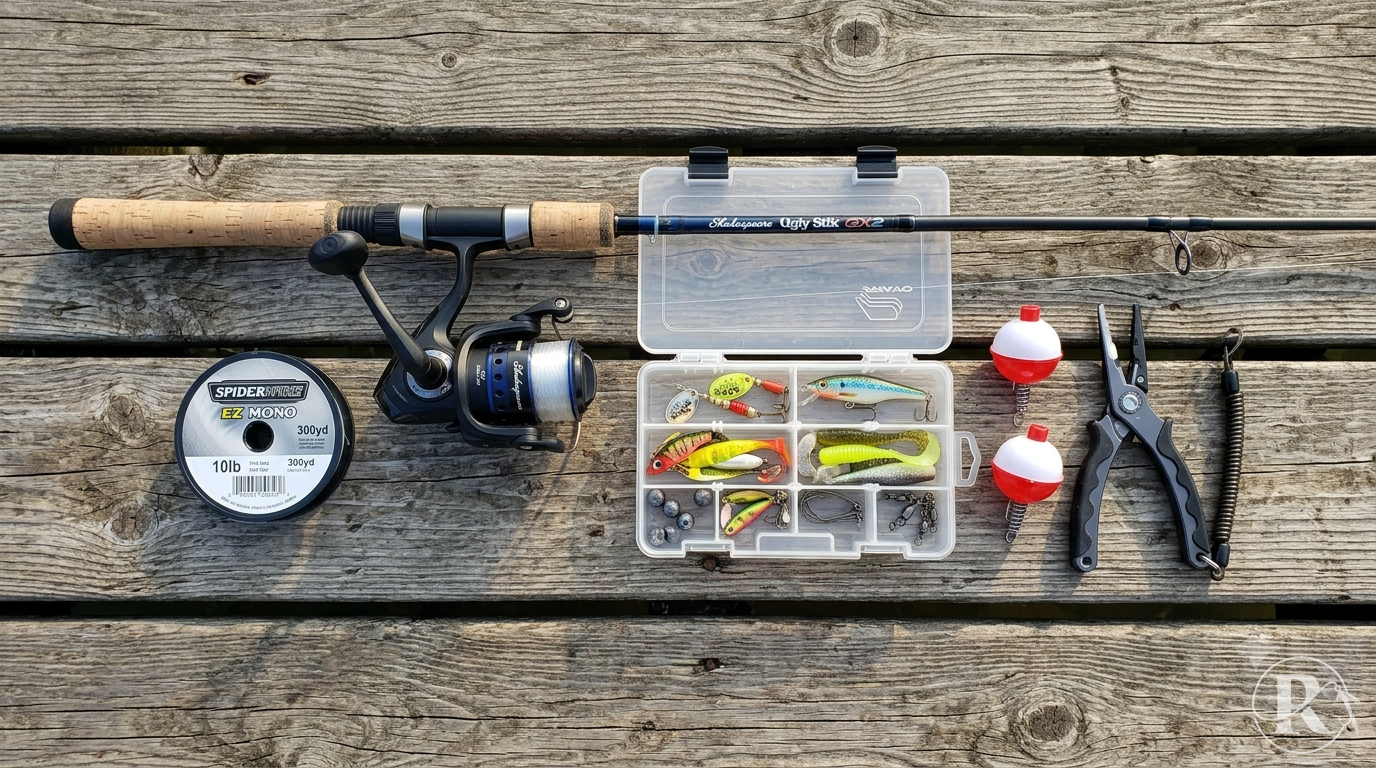
To start fishing, you need a rod and reel combo, fishing line, hooks, bait or lures, and a few basic tackle items like sinkers and bobbers. Add pliers for hook removal and a tackle box to organize everything. This minimal setup allows you to begin fishing effectively while learning what additional equipment might benefit your specific type of fishing.
How Much Should a Beginner Spend on Fishing Gear?
Beginners do not need to spend much to get started: a mid-range rod and reel combo, a spool of line, a starter tackle kit with hooks, sinkers and bobbers, and a handful of lures or bait is enough for a first season. Put most of the budget into the rod and reel, since that is the part that fails first when it is cheap, and buy the small items as a kit rather than one by one. Avoid the cheapest equipment as it may break easily and create frustration, but also resist spending hundreds on high-end gear until you’re certain about your commitment to the sport.
What’s Better for Beginners: Baitcasting or Spinning Gear?
Spinning gear is generally better for beginners due to its ease of use and forgiving nature. Spinning reels are less prone to backlash (line tangles) and require less technical skill to cast effectively. Baitcasting equipment offers more precision and power but comes with a steeper learning curve that can frustrate newcomers to fishing.
How Do I Know What Pound Test Line to Use?
Choose your line strength based on the size of fish you’re targeting and the fishing environment. For panfish and trout in clear water, 4-8 pound test is sufficient. For bass and walleye, 8-12 pound test works well. In environments with obstacles like rocks, logs, or heavy vegetation, increase your line strength by a few pounds. Match your line to your rod’s specifications, which are typically printed on the blank.
Should Beginners Use Artificial Lures or Live Bait?
Most beginners find greater initial success with live bait as it naturally attracts fish through movement, scent, and appearance. Start with versatile options like worms or minnows to catch a variety of species. As you gain experience, gradually incorporate artificial lures into your fishing, beginning with easy-to-use options like spinners or pre-rigged soft plastics that don’t require complex techniques.
Not ready to buy yet? Every charter includes the tackle, so a guided trip is the cheapest way to try several setups before you own any. Browse light tackle trips on Reelzy, which suit beginners best, or start with the fishing charters in the United Kingdom, where three of the five boats sell single seats on shared trips. Travelling further? The fishing charters in Mauritius and the fishing charters in Spain work the same way, so you can try the gear on holiday before you buy your own.
Leave a Reply