
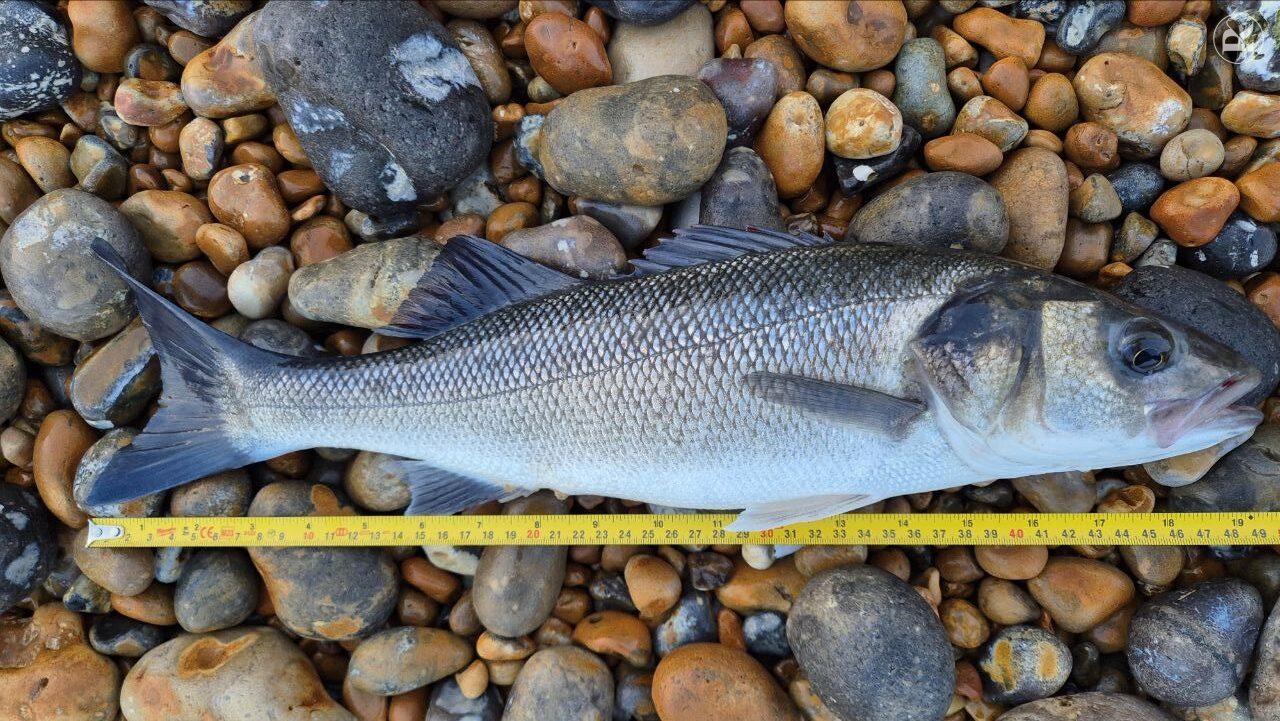
Check it is legal to keep, kill it straight away with a sharp blow or a spike behind the eye, cut the gills and let it bleed head down in a bucket of seawater, gut it, then get it into an ice slurry. Do all of that within the first 15 minutes and a wild sea bass gives you firm, white fillets. Leave it flapping in a dry bucket in the sun and no recipe will rescue it.
This guide goes step by step, explains why each step matters, and covers the 2026 UK rules on which bass you may keep. Most of it applies to any round fish you plan to eat, from mackerel to pollack.
The short version
- Measure it: 42 cm minimum, three per angler per day, release only in February and March.
- Dispatch it at once with a priest or a spike just behind and above the eye.
- Bleed it: cut through the gill arches on both sides and hold it head down in seawater.
- Gut it and rinse the cavity in clean seawater.
- Chill it in a slurry of ice and seawater, out of the sun, until you get home.
1. Check the bass is legal to keep
Decide before you kill the fish, because a dead undersized bass cannot be put back. Under the 2026 bass fishing guidance from the Marine Management Organisation, as summarised by Eastern IFCA (updated July 2026), recreational anglers fishing from the shore or a boat may keep no more than three bass per person per day in January and from 1 April to 31 December. From 1 February to 31 March it is catch and release only. The minimum size is 42 cm.
Measure from the tip of the snout to the end of the tail with the mouth closed, on a flat surface. A bass that only reaches 42 cm when you stretch the tape goes back. The three-fish limit is per angler, so a skipper cannot keep extra fish for a guest who has already reached theirs. Rules differ outside English waters and change from year to year, so check before every trip. Our guide to the 2026 bass and pollack rules for UK charters explains how the change from two fish to three came about and what the new pollack limit means on the same boats.
Three is a ceiling, not a target. Bass grow slowly, and plenty of anglers keep one good fish for the table and release the rest.
2. Dispatch it quickly
A fish left to suffocate struggles for minutes, burning through its energy reserves. That stress shows up later as softer, sourer flesh, and it is also the cruellest way for the fish to go.
Two methods work. The traditional one is a priest, a short heavy club: two firm blows to the top of the head, just behind and above the eyes. The second is ikejime, the Japanese technique of driving a spike into the brain at the same spot, which kills instantly and keeps the fish still. Whichever you use, hold the bass firmly in a wet cloth, mind the sharp spines on the dorsal fin and gill covers, and do it as soon as the fish is unhooked.
3. Bleed it for white fillets
Bleeding is the step most anglers skip and the one that makes the biggest difference on the plate. Blood left in the flesh darkens the fillet along the lateral line, gives a metallic taste and speeds up spoiling.
Lift the gill cover and cut through the red gill arches on both sides, or cut across the throat where the gills join underneath. Do it straight after dispatching, while the heart is still beating and can pump the blood out. Then put the fish head down in a bucket of seawater for a few minutes. Blood clots quickly in still air, and the water keeps it flowing. Change the water if it turns dark and you are bleeding several fish.
It is quicker than most people expect. In bleeding trials on cod, the Norwegian food research institute Nofima found that most of the blood had drained within about three minutes of the cut, with only a little more after that. The same work found that waiting before you bleed costs you: fish left lying after they were killed, or that fought hard in the gear, kept more blood in the fillet. So make the cut straight after the fish is dispatched, not when you get round to it, and use clean seawater, which also rinses the blood off the gills and skin. Three or four minutes head down in the bucket, then on to gutting.
From the shore the method is the same, only the bucket changes. Fill it from the sea, not from a rock pool that has warmed in the sun, keep it in the shade, and do not walk off along the beach with a fish still bleeding in it. If you have no bucket, a deep clean pool at the water’s edge works for the few minutes it takes.
4. Gut it as soon as you can
Wild bass, like most sea fish, can carry roundworm larvae such as anisakis in the gut. After the fish dies, larvae in the gut can move into the surrounding flesh, and the longer the guts stay in, the more chance they have. Gutting early also removes the digestive enzymes and bacteria that break down the belly first.
Make one shallow cut from the vent forward to the throat, keeping the knife point up so you do not burst the gut. Pull out the entrails, scrape away the dark kidney line along the spine with a thumbnail or spoon, and rinse the cavity with clean seawater. Thorough cooking kills anisakis. If you plan to eat bass raw, as sashimi or ceviche, freeze it first: food safety guidance is at least 24 hours at minus 20°C or colder.
5. Chill it in an ice slurry
Heat is what turns a good fish bad. Never leave your catch on the deck, on the rocks or in a bucket of warming water while you carry on fishing.
Bring a cool box with ice and add seawater to make a slush. A slurry touches the whole fish and pulls the heat out far faster than a few loose cubes or a freezer block, and it keeps the skin and scales intact. Keep the cool box shut and in the shade. Once home, drain the fish, pat it dry and keep it on ice or in the coldest part of the fridge until you fillet it. Avoid soaking bass in fresh tap water or melt water for long, which softens the flesh.
How much ice? A fisheries handling guide from the FAO puts the best slurry at about four parts ice to one part fresh seawater, and warns against adding salt to it: extra salt drops the mix below freezing, which stops it working as a gentle chill and can start to freeze the outside of the fish. In practice, half fill the cool box with ice before you leave, top it up with a bucket or two of seawater once you are out, and stir it so the fish sits in cold slush rather than on a bed of dry cubes. Add more ice when it has all turned to water.
6. Scale and fillet it at home
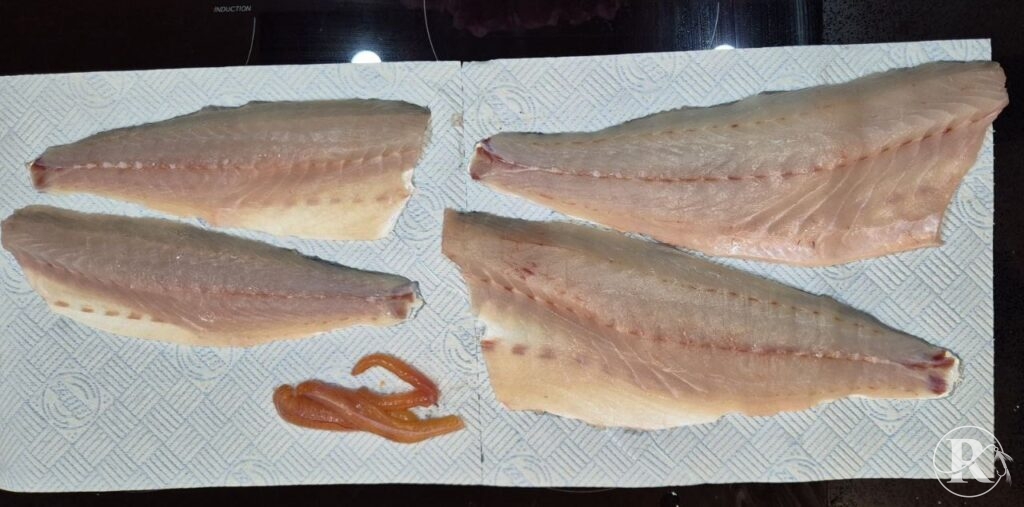
A bass that has been bled, gutted and kept cold is easy to prepare the same evening or the next day. Scale it first, while the fish is whole. Hold it by the tail and run the back of a knife or a fish scaler from tail to head against the scales. Bass scales are large and fly everywhere, so do it in the sink under a trickle of water, or inside a large clear bag. Trim the spiny dorsal fin with kitchen scissors before you start so you do not catch your hand on it.
To fillet, lay the fish on its side and cut behind the gill cover and pectoral fin down to the backbone. Turn the knife towards the tail and run it along the top of the spine in long, flat strokes, keeping the blade against the bones, until the fillet lifts away. Turn the fish over and repeat. Trim off the thin belly flap if you like, then feel along the centre of each fillet for the line of pin bones and pull them out with tweezers or pliers, towards the head. Leave the skin on if you plan to pan fry: scaled bass skin crisps well in a hot pan, skin side down.
Keep the frame and head if you cook stock. Bass bones make a clean, light fish stock, as long as you remove the gills first, which is one more reason to cut them on the boat.
7. How long fresh bass keeps
Cook it soon. Most food safety guidance puts raw fish at one to two days in a fridge at 5°C or colder, and a fish you caught yourself starts that clock the moment it comes out of the water, not when you get home. A bass that was bled, gutted and kept in slurry all day will be at its best on the first or second evening. One that sat warm on the deck will not last that long, whatever the fridge does.
If you will not eat it within two days, freeze it. Freeze fillets rather than whole fish, dry them well, wrap them tightly in cling film or vacuum seal them so no air touches the flesh, and label the bag with the date. Freeze them flat so they freeze fast. Thaw overnight in the fridge, never on the worktop or in warm water, and cook within a day of thawing. Frozen bass is fine for baking, curries and fish cakes, though the texture is never quite the same as a fresh fillet pan fried the night you caught it.
Mistakes that ruin a good bass
- The dry bucket. Slow suffocation, no bleeding, and a warm fish an hour later.
- Gutting at home. Hours with the guts in is the window the parasites and enzymes need.
- Stacking fish without ice. The ones at the bottom of the pile bruise and stay warm.
- Measuring after killing. If it turns out to be 41 cm, you have wasted a fish and broken the law.
When to put it back, and how
Release every bass under 42 cm, every bass caught in February or March, and any fish once you have your three. A bass that is going back needs the opposite handling to one going in the cool box: keep it in or over the water, wet your hands before touching it, support its belly rather than hanging it by the jaw, and remove the hook quickly with forceps. Barbless or crushed-barb hooks make that much easier. Hold it upright in the water facing into the current until it swims off on its own.
On a charter, ask who handles the catch
On a skippered boat much of this is done for you, and that is worth knowing before you book. On the Kent coast, Lady Ann prepares any fish you keep for the table before you leave the boat and carries an ice box. In East Sussex, Kestrel Warrior offers free gutting and fish cleaning, with a fishing coach on board for beginners. HUSSLER out of Ramsgate takes up to six anglers and reported bass to 5lb, a skate and plenty of smoothhounds in its catch report of 5 October 2026. First time on a boat out of Ramsgate? Our guide to your first sea fishing trip from Ramsgate covers what the day looks like and what to ask the skipper. If you would rather learn to find and catch bass yourself, topspotfishing runs guided bass fishing in Kent and Sussex.
Questions anglers ask
Do I really need to bleed a sea bass? You can eat one that was not bled, but bleeding is what gives the white fillet with no dark streak and no metallic taste. It takes a minute with a knife and a bucket of seawater, and it is the step that separates a good bass from an ordinary one.
How long does it take to bleed a sea bass? A few minutes. Cut the gills straight after dispatching it and hold it head down in a bucket of seawater: most of the blood comes out in the first three minutes. Waiting before you make the cut leaves more blood in the flesh.
How long can I wait before gutting it? As short a time as possible. On a boat, gut it once it has bled, or at the latest when you stop fishing. Hours in a warm bucket with the guts in are what soften the belly and give parasites time to move into the flesh.
Can I eat sea bass raw? Only after freezing it first, at least 24 hours at minus 20°C or colder, because wild bass can carry anisakis larvae. Cooking it through also kills them.
Is ice from the fish shop enough? Loose cubes cool the fish where they touch it. Add seawater to make a slurry and the whole fish chills evenly and quickly. Keep the box shut and in the shade.
Should I add salt to the ice? No. Seawater and ice on their own make the right slurry, roughly four parts ice to one part seawater. Extra salt pushes the mix below freezing and can freeze the skin of the fish.
Will the skipper do it for me? Many UK charter crews will dispatch, bleed and gut your fish, and some fillet them for you. Ask when you book, and ask whether there is ice on board or whether you should bring your own cool box.
Before your next bass trip
- Check the date: no bass may be kept in February or March.
- Pack a tape measure, a priest or spike, a sharp knife and a cool box with ice.
- On a charter, ask whether the crew guts and cleans fish and whether there is ice aboard.
- Agree with your group how many fish you want to take home before you start.
Browse fishing charters in Kent and Ramsgate, or every boat on Reelzy that targets European sea bass, and ask the skipper what they do with the fish before you book.
Leave a Reply